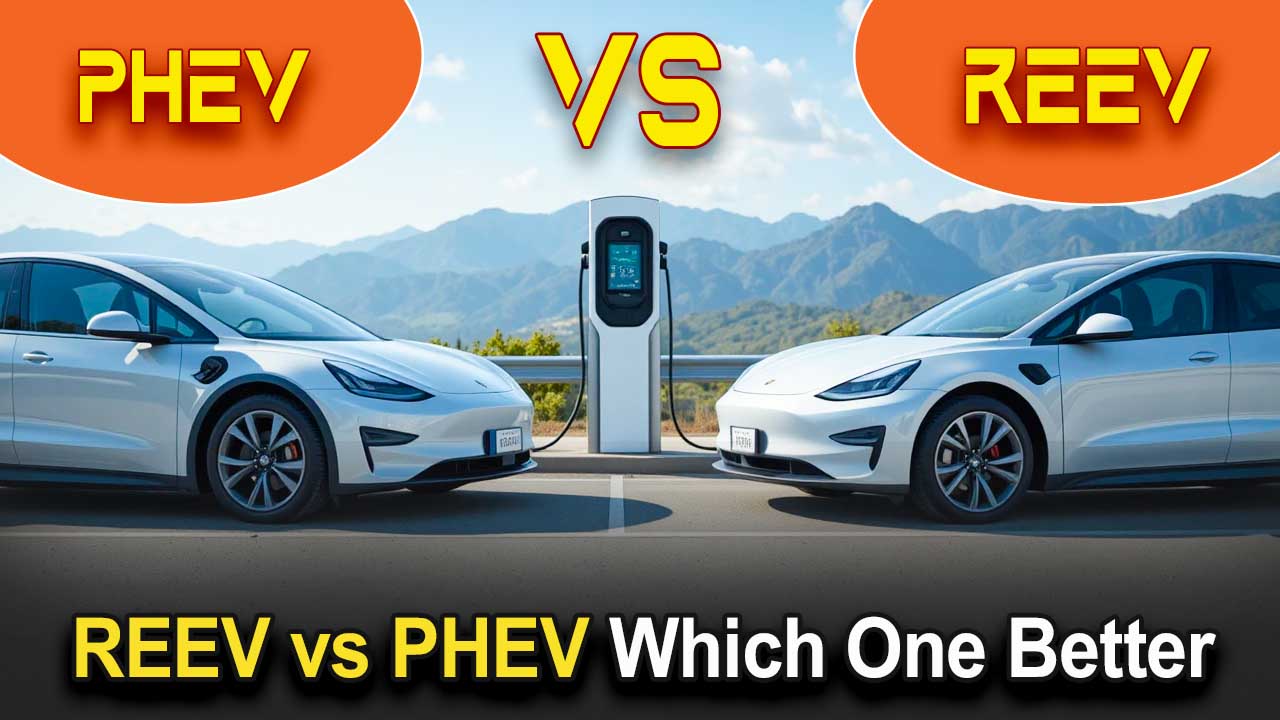
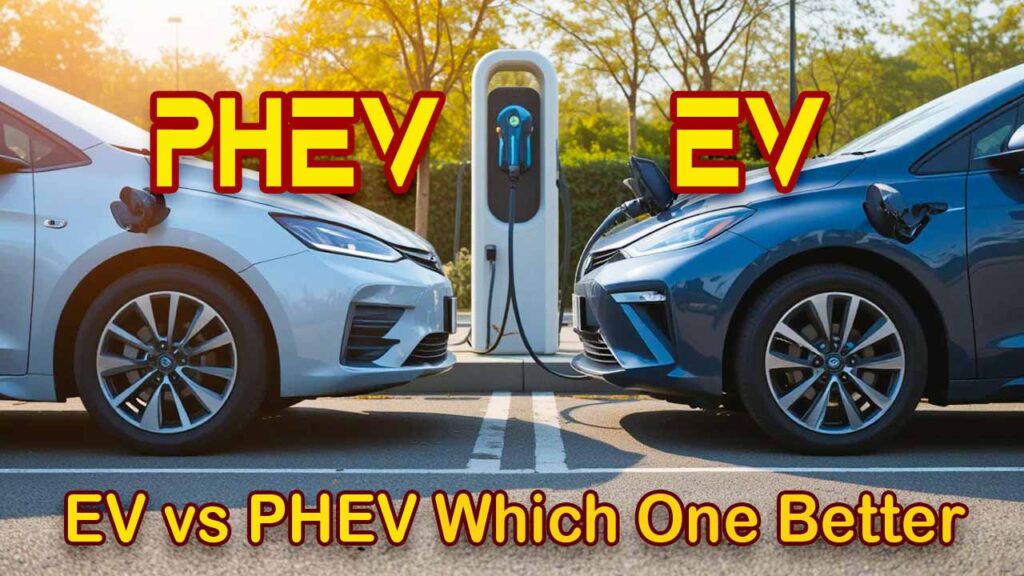
In 2026, the automotive world has reached a crossroads. While the global shift toward sustainability is undeniable, the path to getting there remains divided. For most buyers, the choice boils down to two distinct technologies: Plug-in Hybrid Electric Vehicles (PHEV) and Battery Electric Vehicles (BEV/EV).
I’ve seen how these choices impact not just how we drive, but how we design our homes and manage our daily costs. Choosing between a PHEV and a full EV isn’t just about the car—it’s about matching a high-tech machine to your specific lifestyle. This guide breaks down the performance, costs, and practicalities to help you decide which one is better for you.
1. Understanding the Core Technology
Before we compare them, we must understand how they function.
- PHEV (Plug-in Hybrid): A “bridge” technology. It contains both an electric motor with a medium-sized battery (usually providing 50–100km of range) and a traditional gasoline engine. You can charge it like an EV, but if the battery runs out, the gas engine takes over.
- EV (Battery Electric): A fully electric system. It has a much larger battery (providing 400–700km of range) and no internal combustion engine. It relies entirely on electricity.
2. Range Anxiety vs. Range Reality
In 2026, “Range Anxiety” is the primary reason people still consider PHEVs.
The PHEV Advantage: Infinite Flexibility
The PHEV is the ultimate “no-stress” vehicle. If you live in a region where charging infrastructure is still developing—or if you frequently take spontaneous 500km road trips into rural areas—the PHEV is superior. You get the benefit of silent, electric driving in the city, but the safety net of a gas tank for the highway.
The EV Advantage: The 600km Benchmark
Most 2026 EVs now comfortably hit the 600km range mark on a single charge. For 95% of global drivers, this is more than enough for a week of commuting. If you live in a city with a robust fast-charging network, the “range anxiety” argument for PHEVs starts to disappear.
PHEV vs. EV: 2026 Comparison at a Glance
| Feature | Plug-in Hybrid (PHEV) | Battery Electric (EV) |
| Primary Power | Gas Engine + Electric Motor | Electric Motor Only |
| Electric Range | 50 – 90 km (Typical) | 400 – 700+ km (Typical) |
| Total Range | Unlimited (as long as you have gas) | Battery-dependent (400-700 km) |
| Average Price | $20,000 – $35,000 | $25,000 – $45,000+ |
| Maintenance Cost | Higher (Engine + Battery) | Lowest (No Engine / Oil) |
| Fuel/Energy Cost | Moderate (Depends on gas usage) | Lowest (70% cheaper than gas) |
| Charging Time | 2–4 hours (Level 2) | 20–40 mins (DC Fast Charge) |
| Insurance Premium | Standard / Moderate | Higher (due to battery value) |
| Best For | Long-distance travelers / Rural areas | Daily commuters / City residents |
2026 Market Spotlight: Recommended Models
If you are looking for the best in the 2026 market, here are the top picks we’ve reviewed recently at Mobile Studio 24h:
- Best Luxury EV: Tesla Model Y (2026 Edition) or Hyundai Ioniq 5.
- Best Value EV: 2027 Chevy Bolt (released early) or BYD Atto 3.
- Best Family PHEV: Chery Tiggo 8 (2026 Car of the Year) or Mitsubishi Outlander PHEV.
- Best Premium PHEV: BMW X5 xDrive50e.
3. Total Cost of Ownership (TCO)
When we look at the financial side, the winner depends on how long you plan to keep the vehicle.
Fuel and Electricity
- EV: Offers the lowest possible cost per kilometer. Electricity is significantly cheaper than gasoline globally. In 2026, charging an EV is roughly 70% cheaper than fueling a gas car.
- PHEV: This is a double-edged sword. If you charge it every night and stay within its 50km electric range, your costs are low. However, if you forget to charge it, you are essentially driving a heavy gas car, which increases fuel consumption.
Maintenance Costs
This is where the EV wins decisively.
- An EV has about 20 moving parts in its drivetrain. There are no oil changes, no spark plugs, no mufflers, and no transmission services.
- A PHEV is the most complex vehicle on the road. It has both an electric system and a complex gasoline system. This means you still have to pay for oil changes and engine maintenance, plus manage a high-voltage battery.
4. Charging Logistics and Home Infrastructure
- PHEV: These can often be charged using a standard wall outlet overnight because their batteries are smaller. You don’t necessarily need a high-power “Wallbox” installation.
- EV: To get the best experience, a Level 2 (7kW) home charger is essential. This requires a professional electrical setup. However, once installed, it adds value to your property.
5. Environmental Impact and Resale Value
In 2026, the global “Green Status” of a vehicle affects its resale value.
- Sustainability: EVs are the only path to “Zero Emissions.” While PHEVs are better than pure gas cars, they still contribute to urban pollution. Many global cities are now implementing “Zero-Emission Zones” where PHEVs are charged a fee to enter if they are running on gas.
- Resale Value: In the 2026 secondary market, full EVs from reputable brands (Tesla, BYD, Samsung-partnered brands) are holding their value remarkably well. PHEVs are increasingly seen as “transitional” tech, and their resale value may drop faster as pure EV tech becomes the global standard.
6. The Verdict: Which One is Better?
Choose a PHEV if:
- You have “One-Car” Needs: You only own one vehicle and need it to do everything from city grocery runs to 1,000km cross-border road trips.
- Infrastructure is Poor: You live in an area where public fast-chargers are rare.
- You Can’t Install a Home Charger: You rely on standard wall plugs for slow charging.
Choose an EV if:
- You Want the Lowest Costs: You want to save the maximum amount of money on fuel and maintenance over 5–10 years.
- You Have a Garage/Parking: You can install a Level 2 charger at your home or condo.
- You Value Performance: EVs offer instant torque and a smoother, quieter ride that no hybrid can match.
- You are Future-Proofing: You want a vehicle that will remain compliant with environmental laws for the next decade.

Final Summary
In 2026, the EV is the better overall investment for the average modern driver. The simplicity of the engine, the massive savings on maintenance, and the superior driving technology make it the clear winner for the future.
However, the PHEV remains a brilliant “safety net” for those who aren’t quite ready to trust the charging grid. At Mobile Studio 24h, we recommend the EV for 90% of urban users, but we still respect the PHEV as the perfect tool for long-distance explorers.
Disclaimer
Disclaimer: This comparison is based on 2026 global automotive trends and technical research. Local electricity prices, gasoline costs, and government incentives vary by region. Always test-drive both options before making a final purchase.
Frequently Asked Questions (FAQ)
1. Is the battery warranty different for a PHEV compared to a full EV?
Generally, no. In 2026, most global manufacturers (like BYD, Tesla, and Hyundai) provide a standardized 8-year or 160,000 km warranty for the battery pack in both PHEVs and EVs. However, always check the “State of Health” (SOH) clause—the warranty usually only applies if the battery’s maximum capacity drops below 70%.
2. Can I charge an EV or PHEV in the rain?
Yes, absolutely. Both the vehicle’s charging port and the charging cables (Level 1, 2, and DC Fast Chargers) are designed with high-level weatherproofing (usually IP66 or IP67 ratings). The system is “smart”—electricity does not flow until the car and the charger have “shaken hands” and confirmed a watertight seal.
3. Does a PHEV require more maintenance because it has two engines?
Yes. This is the main drawback of a Plug-in Hybrid. Because it contains both a high-voltage battery system and a traditional internal combustion engine, you still have to perform “old-school” maintenance like oil changes, spark plug replacements, and air filter swaps. A full EV deletes these requirements entirely, saving you roughly 40% on long-term maintenance.
4. If I don’t charge my PHEV, can I still drive it?
Yes, you can drive a PHEV using just the gas engine, but it is not recommended. When the battery is empty, a PHEV becomes less efficient because it is carrying the heavy weight of a battery and electric motor without using them. Your fuel consumption will actually be higher than a standard gas car if you don’t plug it in regularly.
5. Will my EV battery really last for 10 years?
In 2026, data from millions of vehicles shows that modern EV batteries are incredibly durable. On average, they only lose about 1.5% to 1.8% of their capacity per year. This means that after 10 years, your battery should still have over 80% of its original range—more than enough for daily commuting and city driving.