
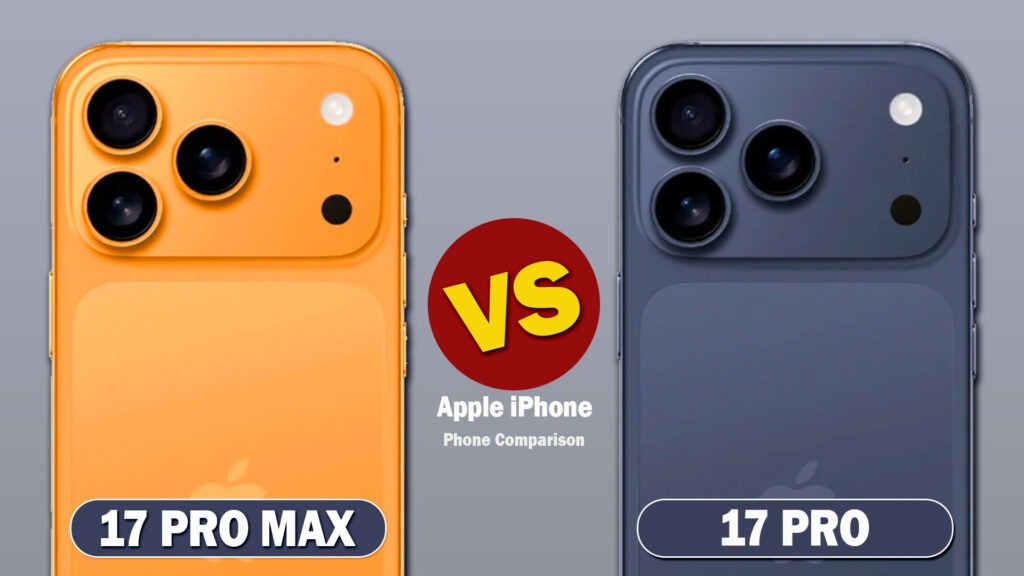
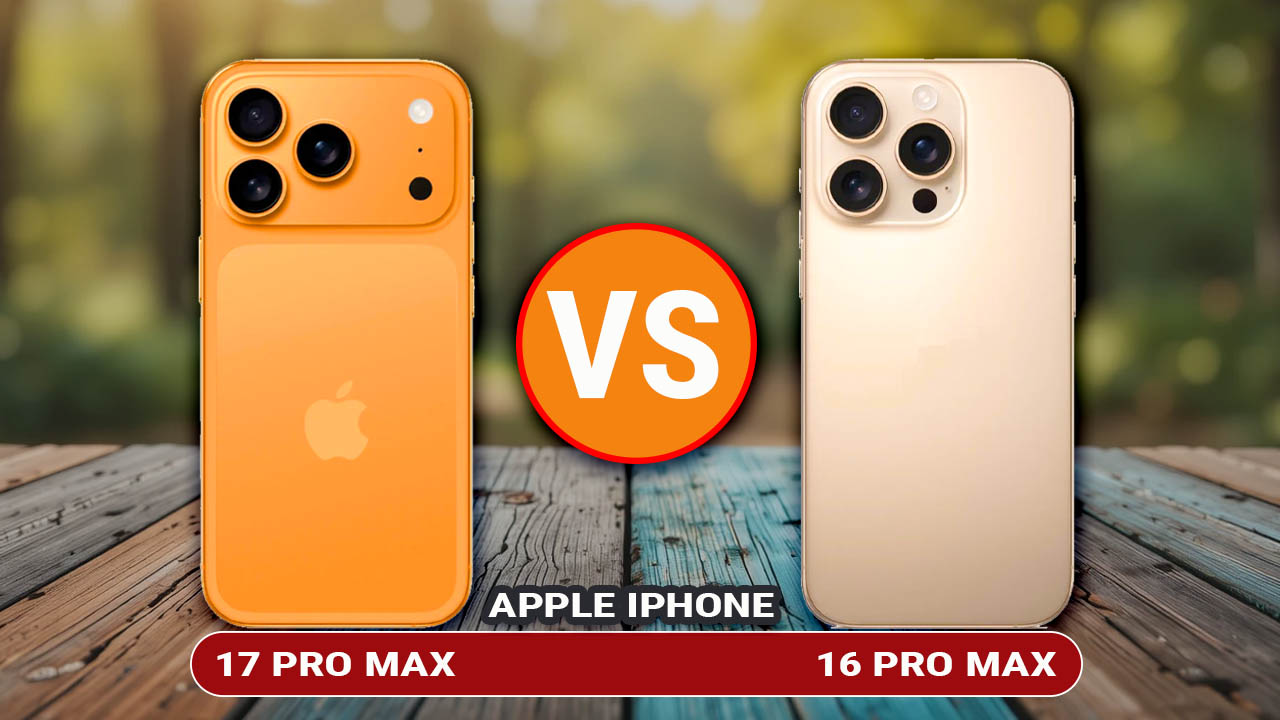
In early 2026, the choice between the iPhone 17 Pro and the iPhone 17 Pro Max has become more nuanced than ever. Both devices represent the “Gold Standard” of Apple’s engineering, featuring the same powerhouse A19 Pro chip, the revamped “Camera Plateau” design, and a significant jump to 12GB of RAM to fuel next-generation Apple Intelligence. While previous years often saw the Max model pulling ahead in camera hardware, this year Apple has achieved near-parity, making the decision almost entirely about ergonomics, screen immersion, and raw endurance.
This comparison is for those who are torn between “the best pocketable iPhone” and “the biggest screen ever on an iPhone.” You will learn precisely where the Pro Max justifies its higher price and whether the standard 17 Pro’s more compact form factor is enough for your daily productivity and media needs.
Quick Comparison
| Feature | iPhone 17 Pro | iPhone 17 Pro Max |
| Display | 6.3″ Super Retina XDR (3000 nits) | 6.9″ Super Retina XDR (3000 nits) |
| Processor | Apple A19 Pro (3nm) | Apple A19 Pro (3nm) |
| RAM & Storage | 12GB RAM | 256GB – 1TB | 12GB RAM | 256GB – 2TB |
| Rear Camera | 48MP + 48MP + 48MP (4x/8x Zoom) | 48MP + 48MP + 48MP (4x/8x Zoom) |
| Front Camera | 18MP Center Stage AF | 18MP Center Stage AF |
| Battery | ~3,988 mAh (Up to 33h Video) | ~5,088 mAh (Up to 39h Video) |
| OS | iOS 26 | iOS 26 |
| Price | Starts at $1,099 | Starts at $1,199 |
Design & Build Quality
Both models have transitioned to a new aerospace-grade aluminum unibody design integrated with a vapor chamber cooling system. This is a departure from the full titanium of the 16 Pro, chosen to better manage the heat from the A19 Pro.
- Size & Weight: The iPhone 17 Pro weighs 206g, making it quite dense but manageable. The Pro Max is a massive 233g, which can feel heavy during long calls.
- Durability: Both feature the new Ceramic Shield 2, which is significantly more scratch-resistant than previous versions.
Conclusion: The iPhone 17 Pro is the king of one-handed use, while the Pro Max feels like a substantial, heavy-duty media tool.
Display Comparison
Apple has pushed the limits of brightness this year. Both screens hit 3,000 nits peak brightness and feature a new anti-reflective coating that makes them legible even in harsh sunlight.
- Screen Size: The Pro Max has grown to 6.9 inches, making it the largest iPhone screen ever. The standard Pro is now 6.3 inches.
Which is better for you?
- Watching Videos: Pro Max (The extra 0.6 inches makes a massive difference for movies).
- Gaming: Pro Max (More room for touch controls and an immersive field of view).
- Reading: iPhone 17 Pro (Easier to hold like a small book for long periods).
Performance & Daily Usage
Both devices are identical under the hood. The A19 Pro chip and 12GB of RAM mean that app opening speeds, 4K video rendering, and Apple Intelligence tasks (like real-time image generation or advanced Siri requests) are exactly the same on both.
- Thermal Management: The Pro Max has a larger vapor chamber simply due to its size, allowing it to stay slightly cooler during long sessions of multitasking or 5G tethering.
Gaming Performance
While the chip is the same, the Pro Max is the superior gaming machine.
- Vapor Chamber: The larger surface area allows for better heat dissipation.
- FPS Stability: In tests of Resident Evil Village or Death Stranding, both maintain 60 FPS, but the Pro Max takes longer to reach the point where it needs to dim the screen for safety.
Camera Comparison
For the first time in years, there is no major “zoom gap” between the two.
- The Sensors: Both feature a triple 48MP setup. The new 48MP Telephoto lens allows for high-quality 8x optical-level zoom via sensor cropping.
- Selfie Camera: Both have the upgraded 18MP Center Stage camera, which is a square sensor that allows you to take landscape-wide selfies even while holding the phone vertically.
Video Recording Comparison
Both phones support ProRes RAW at 4K/120fps and the new Genlock support for professional multi-camera syncing. The Pro Max has a slight advantage for content creators simply because the larger screen acts as a better monitor for checking focus and color during a shoot.
Battery Life & Charging
This remains the biggest differentiator:
- iPhone 17 Pro: Up to 33 hours of video playback. It easily lasts a full day for most users.
- iPhone 17 Pro Max: Up to 39 hours of video playback. This is a “two-day phone” for many people.
- Charging: Both support 40W wired charging, hitting 50% in about 20 minutes.
Pros and Cons
iPhone 17 Pro
- Pros: Comfortable for one-handed use, same pro cameras as the Max, $100 cheaper.
- Cons: Smaller battery, screen can feel cramped for heavy gaming.
iPhone 17 Pro Max
- Pros: Best-in-class battery life, massive 6.9-inch display, 2TB storage option.
- Cons: Very heavy and wide, hard to fit in small pockets.
Price & Value for Money
With only a $100 price difference, the Pro Max offers better “spec value” because you get a much larger screen and battery. However, if you value comfort and don’t want a “brick” in your pocket, the 17 Pro is the more practical value choice.
Which One Should You Buy?
- Buy iPhone 17 Pro if: You want a professional camera that fits in your pocket and you prefer using your phone with one hand.
- Buy iPhone 17 Pro Max if: You consume hours of video daily, you are a hardcore mobile gamer, or you travel often and need the longest battery life possible.
Final Verdict
Overall, both phones are excellent, but the iPhone 17 Pro Max is the best for power users who prioritize media and battery. The iPhone 17 Pro is ideal for most users who want top-tier performance and cameras in a more comfortable, portable size.
FAQs
- Is there a camera difference this year? No, both models feature the same 48MP triple-lens system and 18MP selfie camera.
- Which phone is better for gaming? The Pro Max, due to its larger screen and better heat dissipation.
- Does the Pro Max charge faster? No, both support the same 40W fast charging.
- Is the iPhone 17 Pro too small? At 6.3 inches, it is actually slightly larger than the previous standard Pro models.
- Does the 17 Pro Max have more RAM? No, both models come with 12GB of RAM.
Disclaimer: This comparison is based on the technical specifications and research for the early 2026 flagship lineup. Actual performance may vary depending on usage and software updates.






1 comment on “iPhone 17 Pro VS iPhone 17 Pro Max: Full Comparison”