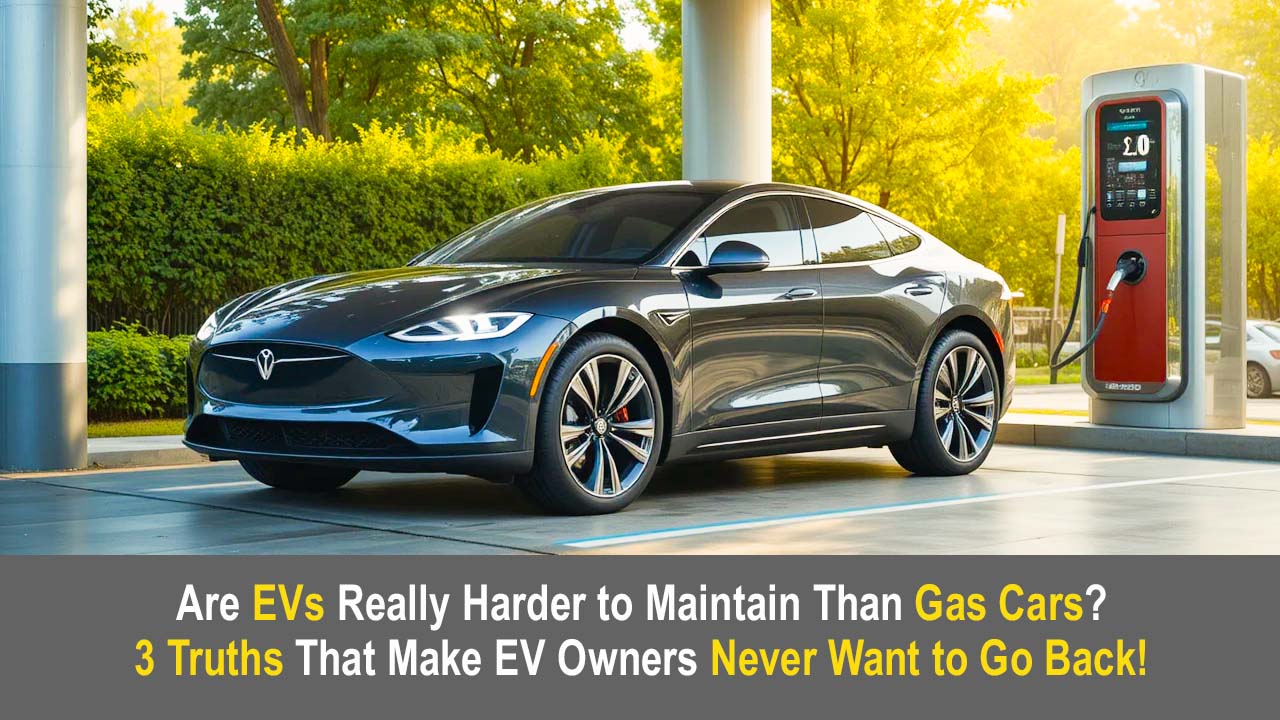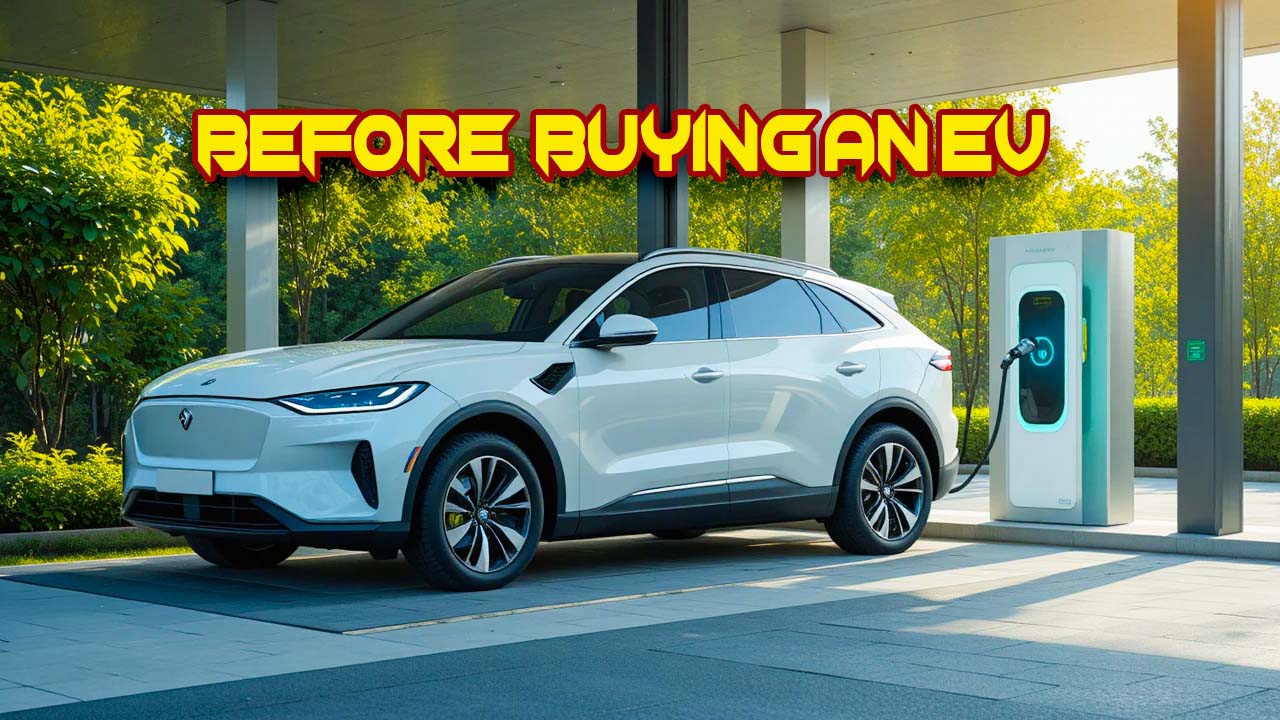
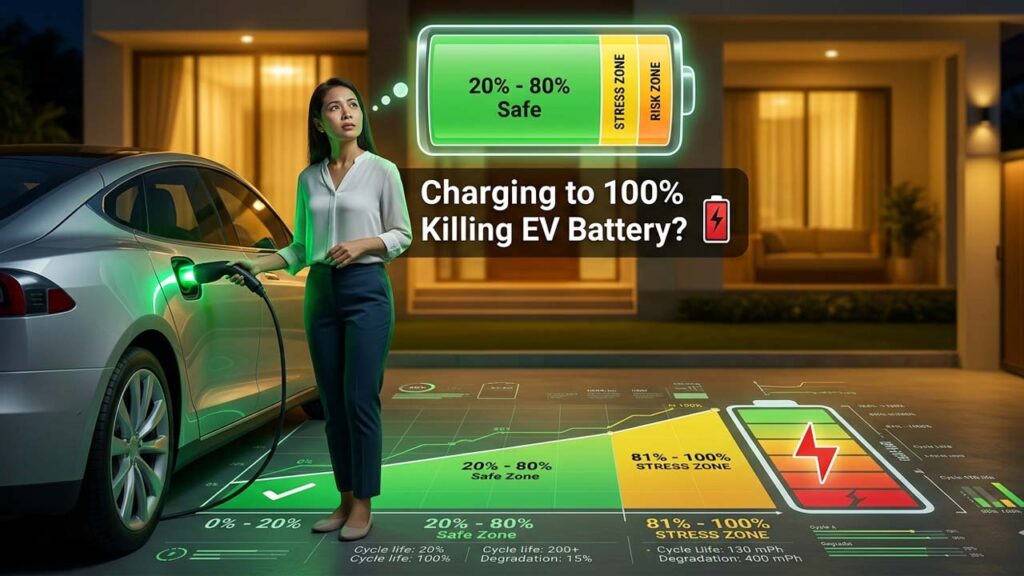
As electric vehicles (EVs) transition from early-adopter novelties to mainstream daily drivers, a persistent question haunts the minds of new owners every time they plug in at night: “Is charging to 100% actually killing my battery?”
If you have spent any time in EV forums or reading owner manuals, you’ve likely seen the “80% rule” mentioned with religious fervor. Yet, some manufacturers—like Tesla with its newer models—explicitly tell owners to charge to 100% at least once a week. This conflicting advice can make any driver anxious.
The truth is that the “correct” way to charge your EV isn’t a single universal rule. It depends entirely on the chemical DNA of your battery. Here is the definitive guide to understanding EV battery health in 2026.
1. The Chemistry Divide: NMC vs. LFP
To understand charging limits, you first need to know what’s under your floorboards. Most modern EVs use one of two main lithium-ion chemistries:
NMC (Nickel Manganese Cobalt)
- Found in: High-performance and long-range EVs (e.g., Hyundai IONIQ 5, Ford Mustang Mach-E, older Tesla Model 3 Long Range).
- The Verdict: Don’t charge to 100% daily. NMC batteries are sensitive to high voltage stress. Keeping them at a high state of charge (SoC) for long periods accelerates chemical degradation. For these cars, the 80% rule is a golden standard.
LFP (Lithium Iron Phosphate)
- Found in: Budget-friendly or entry-level EVs (e.g., Tesla Model 3 RWD, BYD Seagull, MG4).
- The Verdict: 100% is actually recommended. LFP batteries are much more durable and tolerant of high voltage. In fact, their “voltage curve” is so flat that the car’s computer (the Battery Management System) can lose track of how much energy is left unless it sees a full 100% charge regularly for calibration.
2. Why 100% Can Be Stressful
Think of an EV battery like a sponge. When the sponge is dry, it’s easy to soak up the first few cups of water. But as it gets saturated, forcing that last bit of water into the fibers requires more pressure.
In a battery, that “pressure” is voltage stress. When you push a battery to its absolute maximum capacity:
- Heat Increases: The final 10% of charging is the least efficient and generates the most internal heat.
- Chemical Degradation: For nickel-based batteries, staying at maximum voltage causes the internal materials to break down faster over years of use.
- Parasitic Reactions: High SoC encourages tiny chemical reactions that slowly eat away at the battery’s ability to hold a charge.
3. The “Battery Buffer” Secret
Before you panic about that one time you charged to 100% and let the car sit, know this: Your car is lying to you (for your own good).
Manufacturers include a “usable” capacity and a “total” capacity. When your dashboard shows 100%, the actual battery cells might only be at 95% or 96%. This “top-end buffer” acts as a safety net to prevent owners from accidentally bricking their batteries. Even so, consistently sitting at the top of that usable range still applies more stress than sitting at 50% or 70%.
4. When Should You Charge to 100%?
Even if you have an NMC battery that prefers an 80% limit, there are three specific times when you should hit 100%:
- The Road Trip Exception: If you are heading out on a 400km journey, charge to 100%. The key is to drive the car shortly after it hits 100%. The damage isn’t caused by reaching 100%; it’s caused by sitting at 100% for days in a hot garage.
- BMS Recalibration: Every few months, your car’s range estimate might become “hallucinating” (showing 10% but then dying at 5%). A full charge to 100% helps the Battery Management System (BMS) reset its “orientation points,” making your range display more accurate.
- Cold Weather Prep: In freezing temperatures, battery efficiency drops. Charging to 100% provides a necessary buffer for the range loss caused by the cold and allows the car to use more energy for pre-conditioning the cabin.
5. The Golden Rules for 2026 EV Owners
To maximize your battery’s lifespan (which can easily last 15–20 years with proper care), follow these best practices:
- Check Your Manual: Identify if you have an LFP or NMC battery. If you’re unsure, look for the manufacturer’s recommended “Daily” charge limit in the settings menu.
- The 20-80% Sweet Spot: For daily commuting, try to keep the battery between 20% and 80%. This is the “comfort zone” where the chemistry is most stable.
- ABC (Always Be Charging… but Slowly): Regular Level 2 (home/work) charging is much gentler than DC Fast Charging. Frequent use of ultra-fast chargers at 100% SoC is the fastest way to degrade a pack.
- Avoid 0% at All Costs: Dropping to 0% and letting the car sit is far more dangerous than charging to 100%. A completely depleted battery can “sleep” into a state where it can no longer be recharged.
- Don’t Stress the Small Stuff: Modern EVs are incredibly resilient. Occasionally charging to 100% or fast-charging on a vacation will not ruin your car. It’s the repeated daily habits over five years that make the difference.
The Bottom Line
Is charging to 100% every day bad? For most EVs, yes—it’s like redlining your engine constantly. But for LFP-equipped cars, it’s a standard requirement. Know your chemistry, set your charge limit, and then stop worrying. Your EV is designed to be driven, not just managed!
Frequently Asked Questions (FAQ)
1. Is it okay to charge my EV to 100% every night?
It depends on your battery type. If you have an LFP battery, charging to 100% is recommended for calibration. However, for NMC batteries, it is better to limit daily charging to 80% to reduce chemical stress and prolong battery life.
2. Will fast charging (DC) damage my battery more than home charging (AC)?
Frequent use of ultra-fast DC chargers generates significant heat, which can accelerate degradation over time. For maximum battery health, use Level 2 AC charging for your daily needs and save DC fast charging for long road trips.
3. Does the “80% rule” still apply to the latest 2026 EV models?
Yes, for nickel-based (NMC) batteries, the rule still applies as a best practice. However, modern Battery Management Systems (BMS) have become much more efficient at managing “buffers,” making batteries far more resilient to occasional full charges than they were a decade ago.
4. Is it dangerous to let my battery drop to 0%?
Yes. Letting an EV sit at 0% is often worse than keeping it at 100%. Deep discharging can cause cells to fall below a voltage threshold where they can no longer accept a charge, potentially leading to a permanent “bricked” battery.
5. How much range will I lose over 5 years if I charge to 100% daily?
For an NMC battery, daily 100% charging might result in a 5-10% loss in total capacity over five years, compared to only 2-3% if kept at 80%. LFP batteries, meanwhile, show almost negligible degradation when charged to 100% regularly.