The global automotive landscape has shifted. In 2026, the “Price War” led by Chinese manufacturers and the technological leaps by traditional giants like Samsung, Tesla, and Toyota have made EVs more accessible than ever. However, an EV is not just a “gas car with a battery.” It is a software-driven asset that requires a different mindset.
Before you sign the papers, here are the essential pillars of EV ownership you must understand.
1. The Real Cost of Ownership (TCO)
In 2026, the sticker price is only half the story. While EVs often carry a $3,000–$5,000 premium over internal combustion engine (ICE) vehicles, the Total Cost of Ownership (TCO) is where the EV wins.
The Savings Formula
- Maintenance: With approximately 20 moving parts compared to 2,000 in a gas engine, you can say goodbye to oil changes, spark plugs, and timing belts. Global data shows EV maintenance costs are 40% lower over five years.
- Fuel vs. Electricity: Depending on your country, electricity is consistently 60% to 80% cheaper than gasoline per kilometer.
- Depreciation: In the past, EVs lost value quickly. In 2026, the market has stabilized. Trusted brands with high “State of Health” (SOH) battery ratings now hold their value as well as luxury gas SUVs.
2. Infrastructure: Your “Fuel Station” is Now at Home
The most significant lifestyle change is how you “refuel.” In 2026, public charging is for road trips; home charging is for daily life.
Home Installation
Before buying, check if your residence (house or condo) can support a Level 2 (240V) charger.
- Sakmai Property Tip: If you live in a modern development in Phnom Penh or any global city, check if the parking structure is “EV-Ready.”
- V2H (Vehicle-to-Home): Many 2026 models now support V2H. This allows your car to act as a massive backup battery for your home during power outages—a huge value-add for property owners.
Public Networks
Research the charging standard in your region. Most of the world has converged on the CCS2 or NACS (Tesla) standard. Ensure your chosen vehicle is compatible with the ultra-fast DC chargers (150kW+) found along major highways to ensure road trips remain stress-free.
3. Understanding the “Battery Ecosystem”
The battery is the heart and the most expensive component of your EV. In 2026, battery technology has bifurcated into two main types:
LFP vs. NMC Batteries
- LFP (Lithium Iron Phosphate): Common in budget-friendly EVs (like the BYD Dolphin or entry-level Teslas). They are incredibly durable and can be charged to 100% daily without significant degradation.
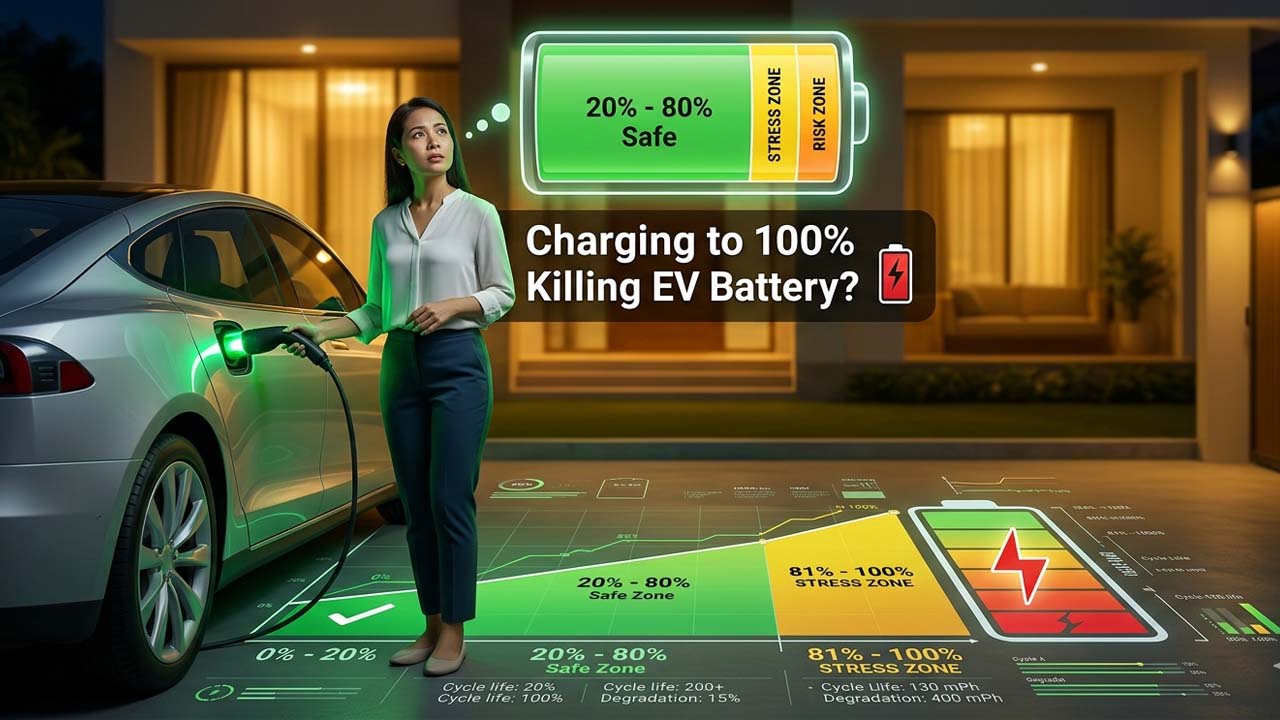
- NMC (Nickel Manganese Cobalt): Found in long-range and performance EVs. These offer more “punch” and range but should typically be kept between 20% and 80% for daily use to preserve their lifespan.
The 1.8% Rule
Modern 2026 batteries are designed to last. On average, EV batteries now only degrade by 1.8% per year. This means after 10 years, you likely still have over 80% of your original range.
4. The “Software-Defined” Experience
Buying an EV in 2026 is like buying a smartphone on wheels. You aren’t just buying hardware; you are buying Over-the-Air (OTA) Updates.
- Long-Term Support: Just like the Samsung Galaxy A06 5G updates we discussed, top-tier EVs now receive software updates that can improve range, increase charging speed, and add new self-driving features years after you buy the car.
- Connectivity: Ensure the car’s native system supports 5G. A “disconnected” EV in 2026 loses half its utility, especially for navigation and real-time charging station status.
5. Regional Incentives and “Green” Credits
Governments globally are still pushing for 100% electrification. Before you buy, consult a local tax professional or the dealership about:
- Tax Credits: Many regions offer up to $7,500 in direct credits.
- Import Duties: In countries like Cambodia or Thailand, EVs often have significantly lower import taxes than high-displacement gas cars.
- Charging Rebates: Some utility companies will provide a $500–$1,000 rebate to help you install a charger at home.
6. Range Reality: The 80% Rule
Never buy an EV based purely on the “Advertised Range.”
- The Highway Penalty: EVs are most efficient in the city. On the highway at 110 km/h, your range can drop by 20%.
- The Climate Factor: Extreme heat (common in SE Asia) requires the AC to run constantly, which siphons battery power. Always buy a car with 20% more range than your longest typical daily commute.
7. Pre-Purchase Checklist for 2026 Buyers
To ensure you make the right choice for your lifestyle, follow this 5-point checklist:
- Check the SOH (State of Health): If buying used, ask for a battery diagnostic report.
- Test the Infotainment: Does the screen lag? If the software is slow today, it will be unusable in three years.
- Verify Charging Speed: Look for a “Peak DC Charge Rate” of at least 100kW. Anything less will make long road trips frustrating.
- Confirm the Warranty: Most 2026 EVs come with an 8-year or 160,000km battery warranty. Do not accept less.
- Check the Heat Pump: Ensure the car has a dedicated thermal management system (Heat Pump) to keep the battery cool in hot climates, extending its life significantly.
Summary: Is 2026 the Year to Go Electric?
For the global consumer, 2026 represents the “Sweet Spot” of EV adoption. The technology has matured, the prices have dropped due to global competition, and the infrastructure is finally catching up.
If you have a place to charge at home and you value low running costs, high-tech features, and a quiet, powerful driving experience, the answer is a resounding yes. By following this guide, you aren’t just buying a car; you are investing in a more efficient, sustainable, and technologically advanced future.
Short Buyer’s Guide
The 2026 Verdict: If you drive more than 30km a day, an EV will likely pay for itself within 4 years through fuel savings alone. Focus on Battery Chemistry (LFP for daily city use) and Software Support rather than just top speed. In 2026, your car’s value is determined by its battery health and its ability to receive updates.
Disclaimer
Disclaimer: This article is based on global market trends and technical specifications as of April 2026. Financial incentives, electricity costs, and model availability vary by country. Always consult with a local automotive expert and tax advisor before making a final purchase.