Quick Verdict
- The Good: Unbeatable entry price for a PHEV; smooth transition between EV and Hybrid modes; spacious rear seating with flat floor; signature 12.8-inch rotating screen.
- The Bad: Interior plastics feel budget-friendly in lower trims; engine can be noisy when the battery is low; slower DC charging compared to luxury rivals.
- Final Score: ⭐⭐⭐⭐☆ (4.5/5) — The best “entry-point” for families moving from gasoline to electrified driving.
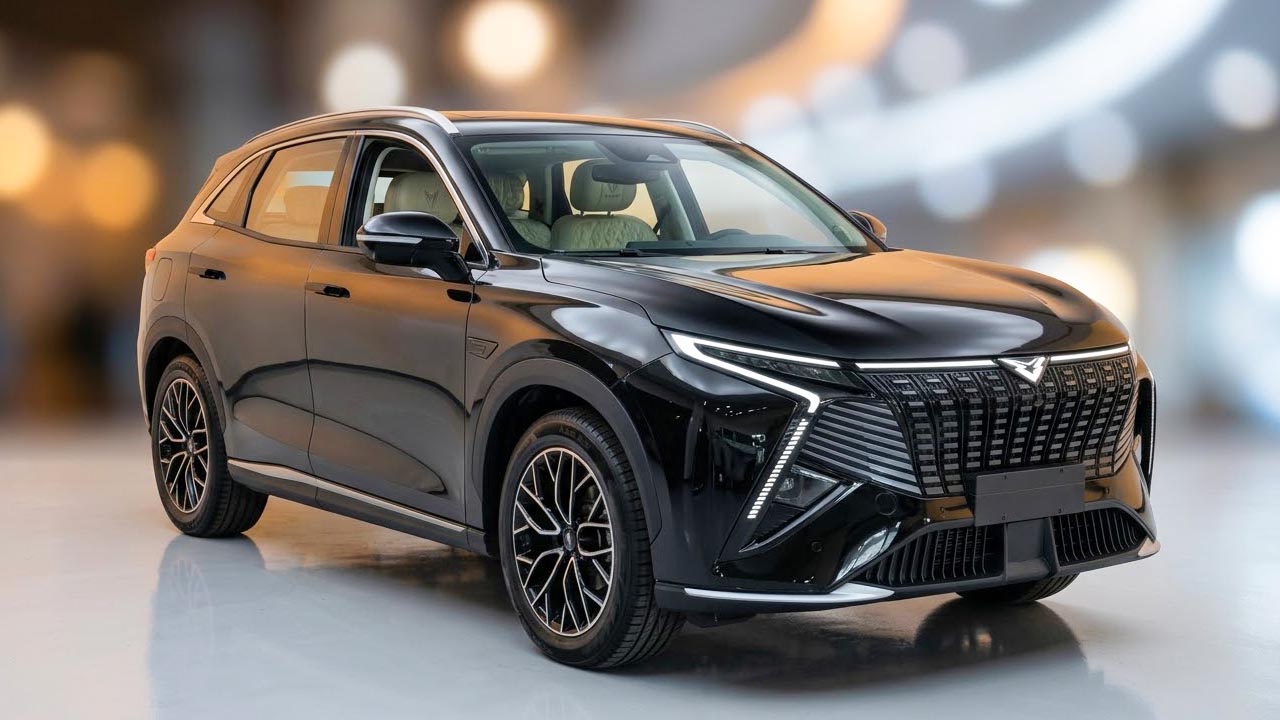
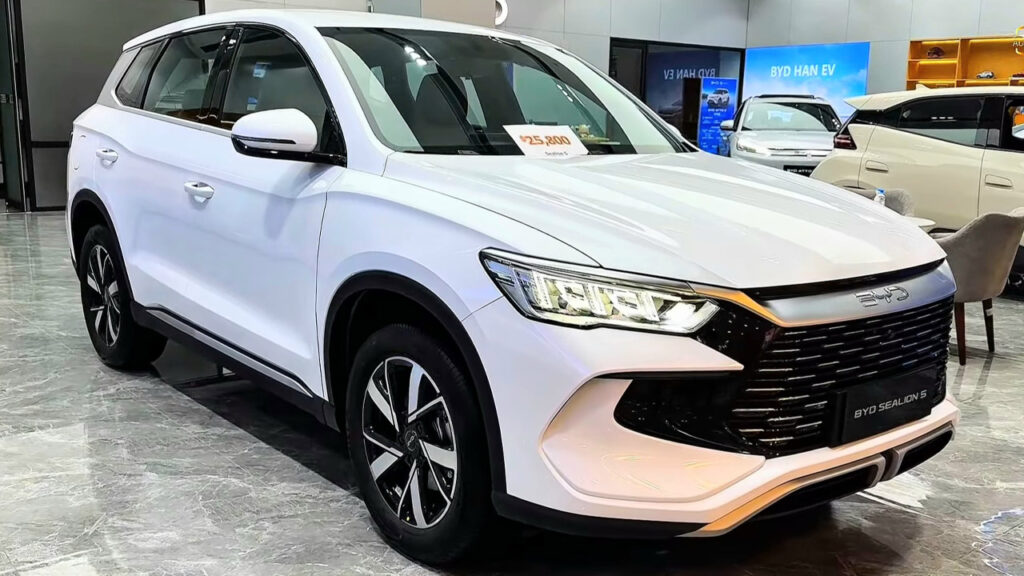
The BYD Sealion 5 (known as the Sealion 05 or Song Pro DM-i in some markets) arrives as the latest expansion of the Chinese automaker’s “Ocean Series.” Positioned just below the Sealion 6 (Seal U), this compact-to-mid-sized SUV is designed to act as a bridge for buyers who aren’t quite ready to go fully electric but want the benefits of EV driving for their daily commute. By undercutting its larger sibling in price while retaining the core DM-i plug-in hybrid technology, the Sealion 5 targets the sweet spot of the family SUV market currently dominated by the Toyota RAV4 Hybrid and Corolla Cross.
Full Specifications Table
| Feature | Details |
| Engine / Motor | 1.5L High-Efficiency Hybrid Engine + Electric Motor |
| Combined Power | 156 kW (approx. 212 HP) |
| Transmission | E-CVT (Electric Continuously Variable) |
| Battery Type | BYD Blade Battery (LFP) |
| Combined Range | Up to 1,030 km (640 miles) |
| Drive Type | Front-Wheel Drive (FWD) |
Exterior Design: Restrained “Ocean” Aesthetics
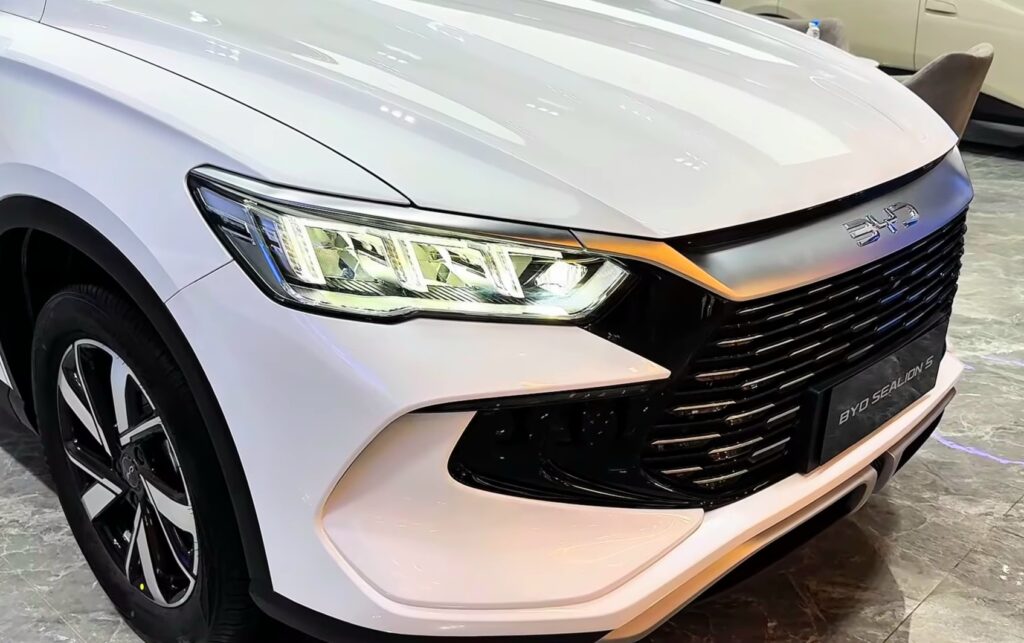
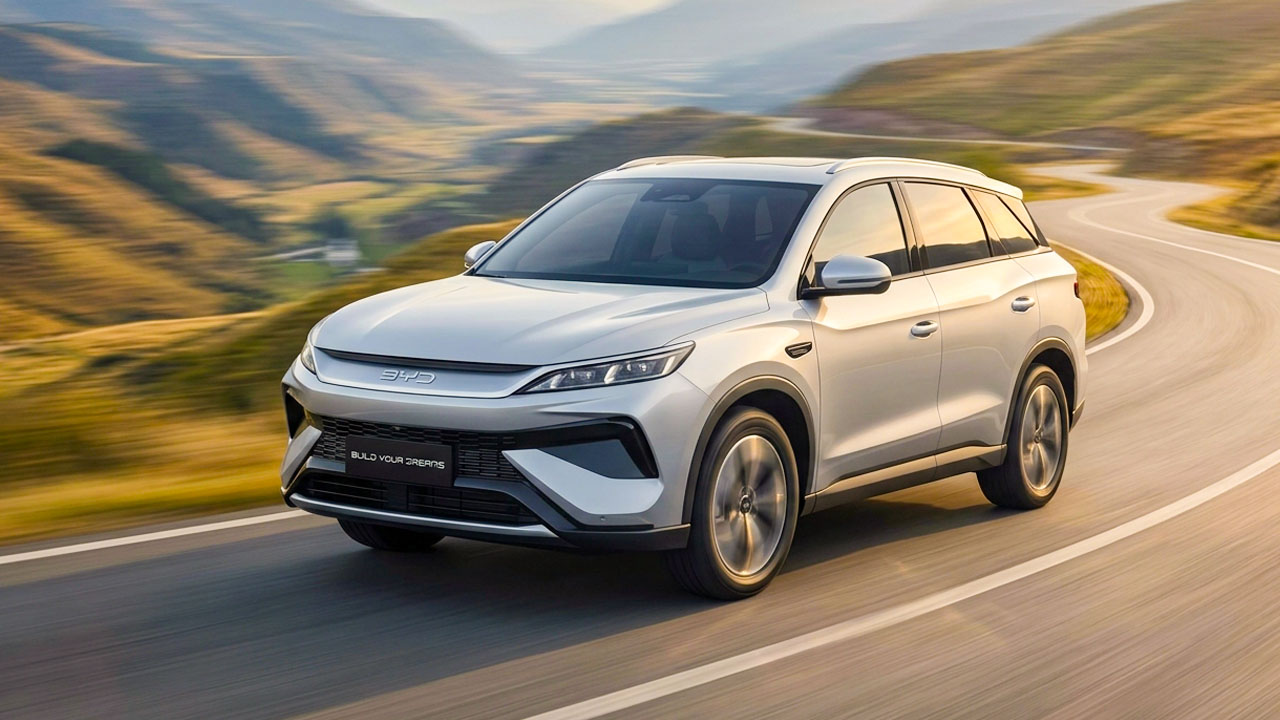
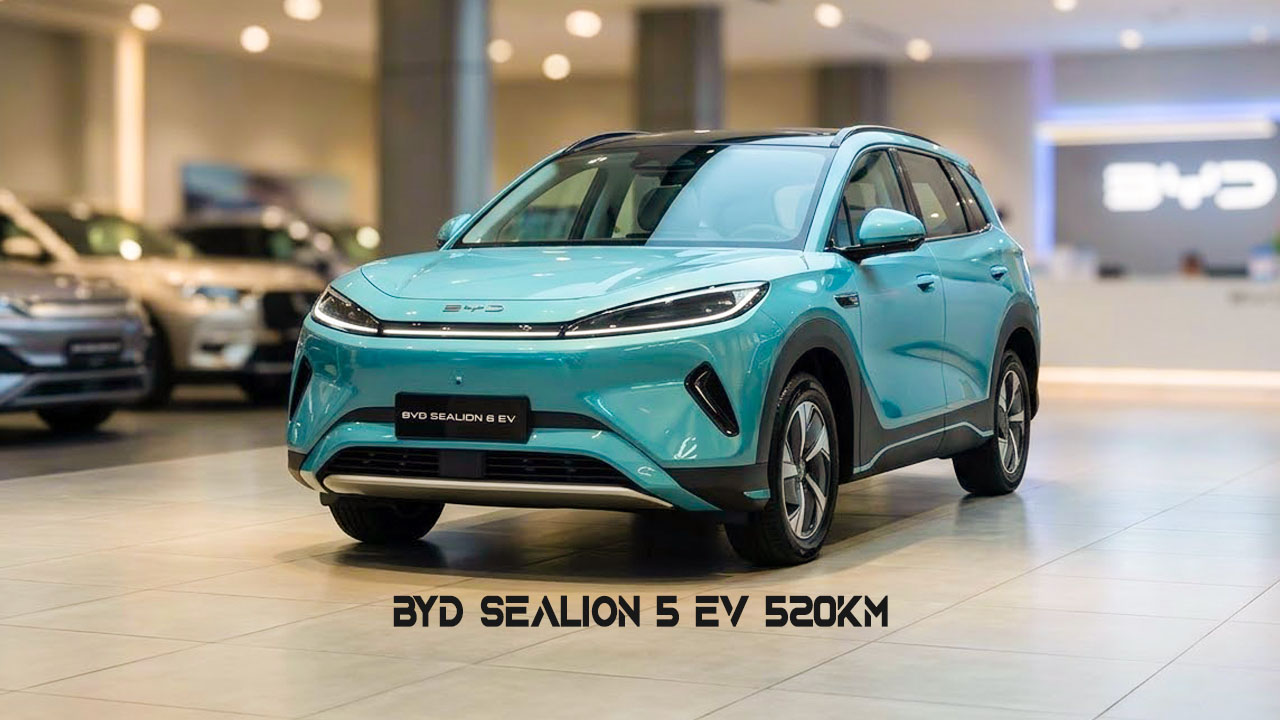
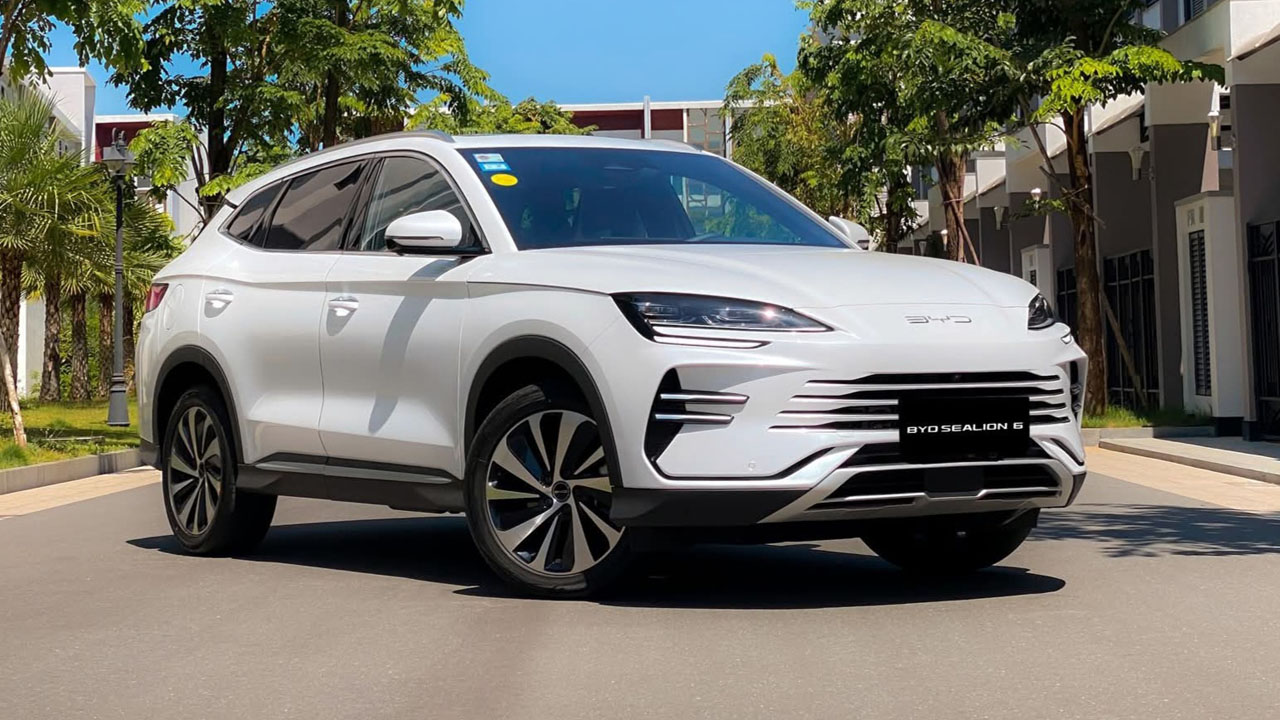
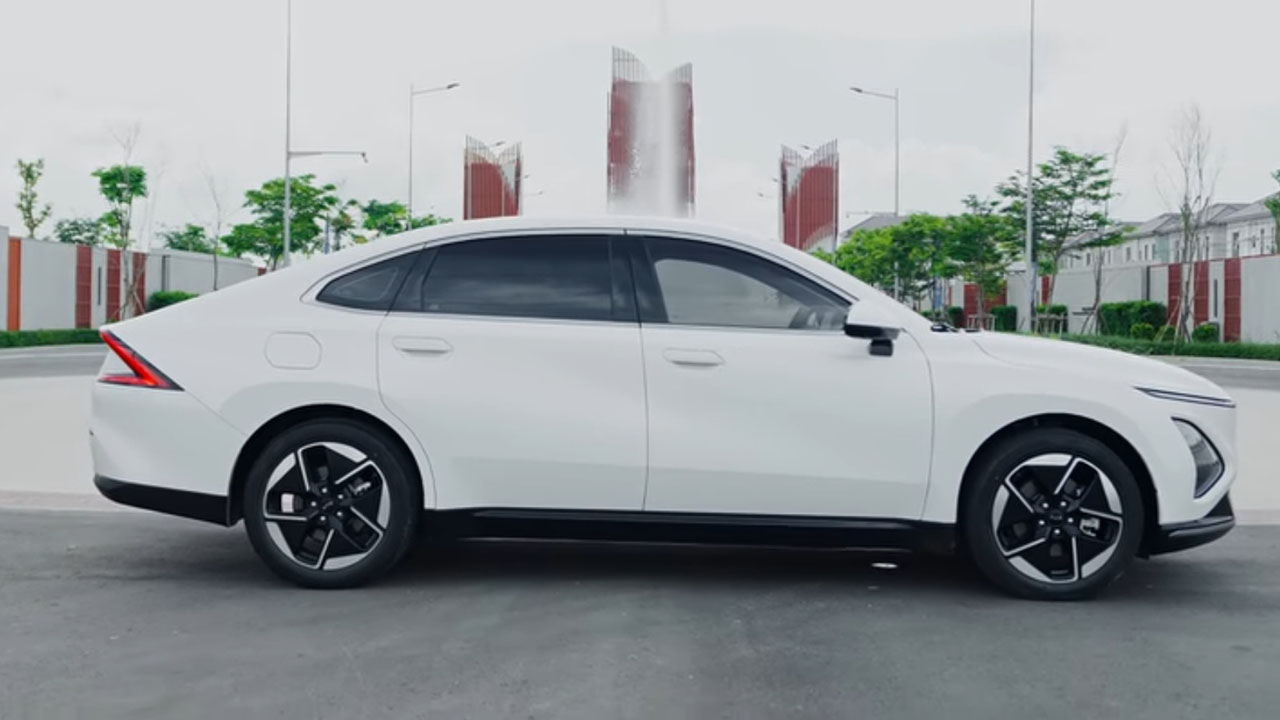
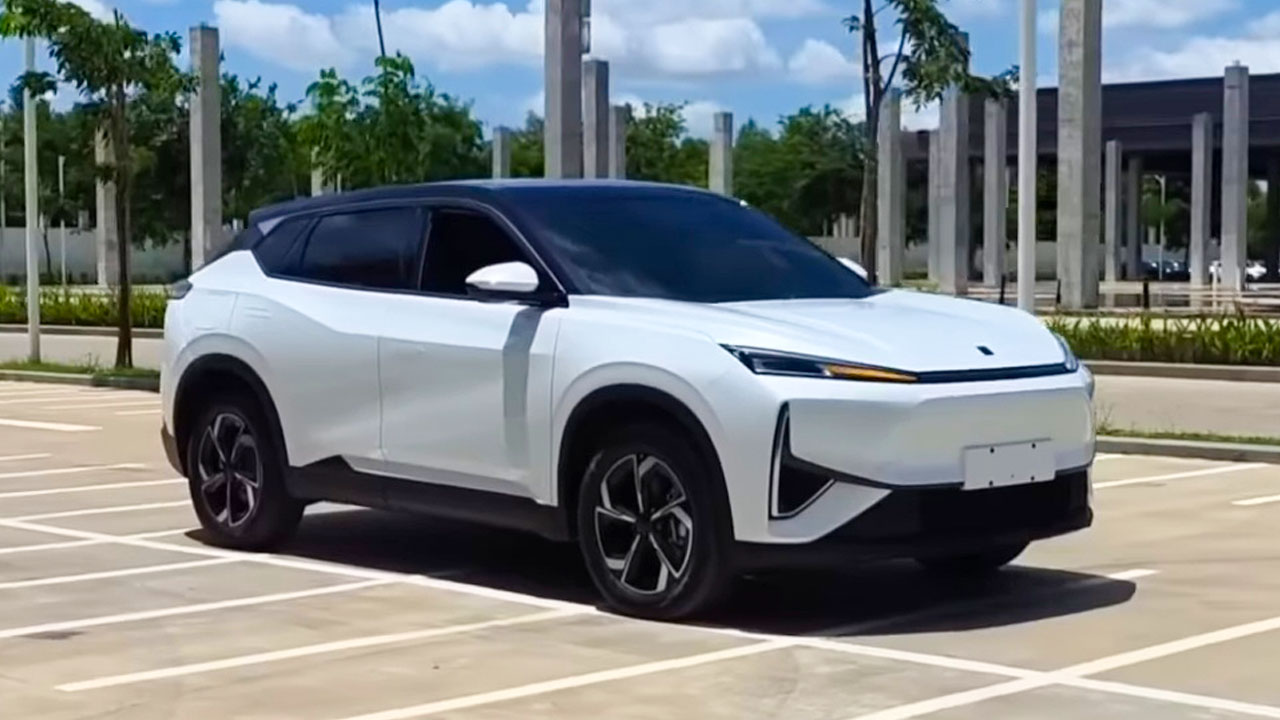
Unlike the quirky Atto 3, the Sealion 5 adopts a more mature and conventional look. It follows BYD’s “Ocean Aesthetics” design language but interprets it with a slotted, ripple-effect front grille that integrates neatly into the bumper, rather than the fully closed-off face of BYD’s pure EVs.
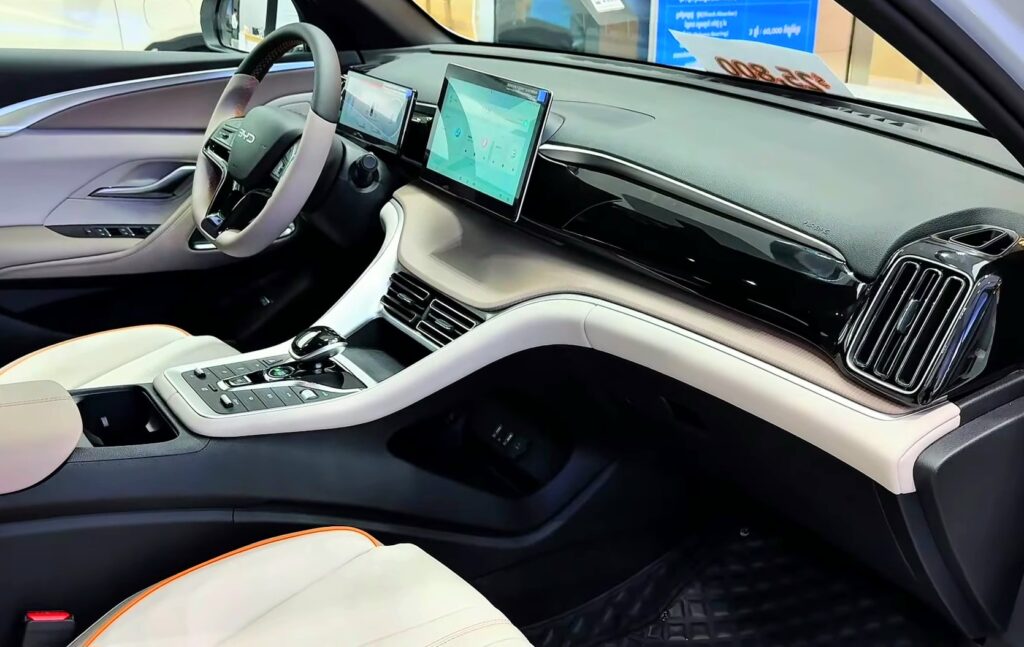
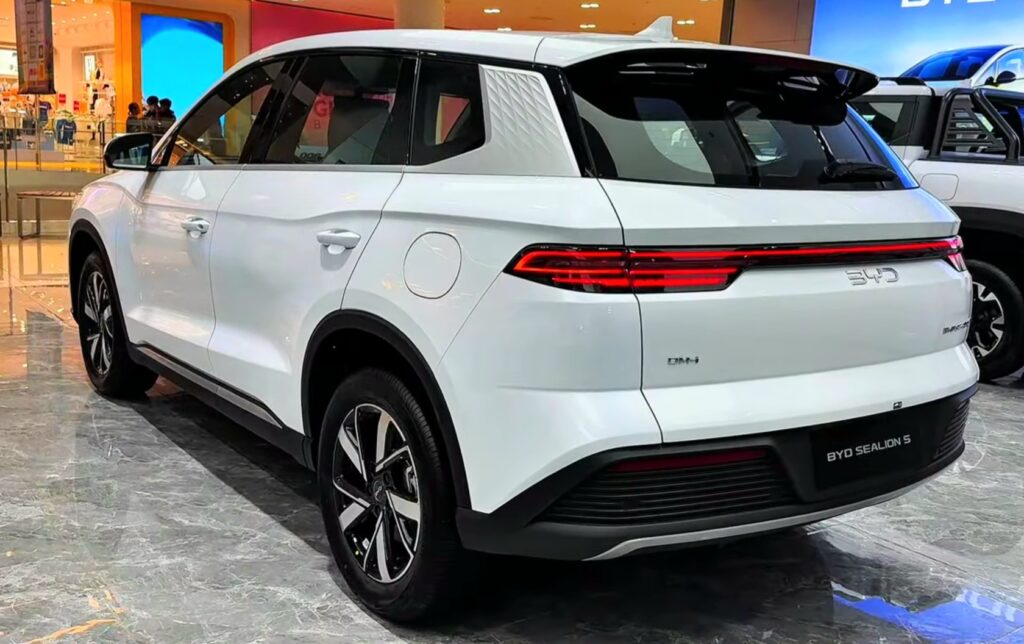
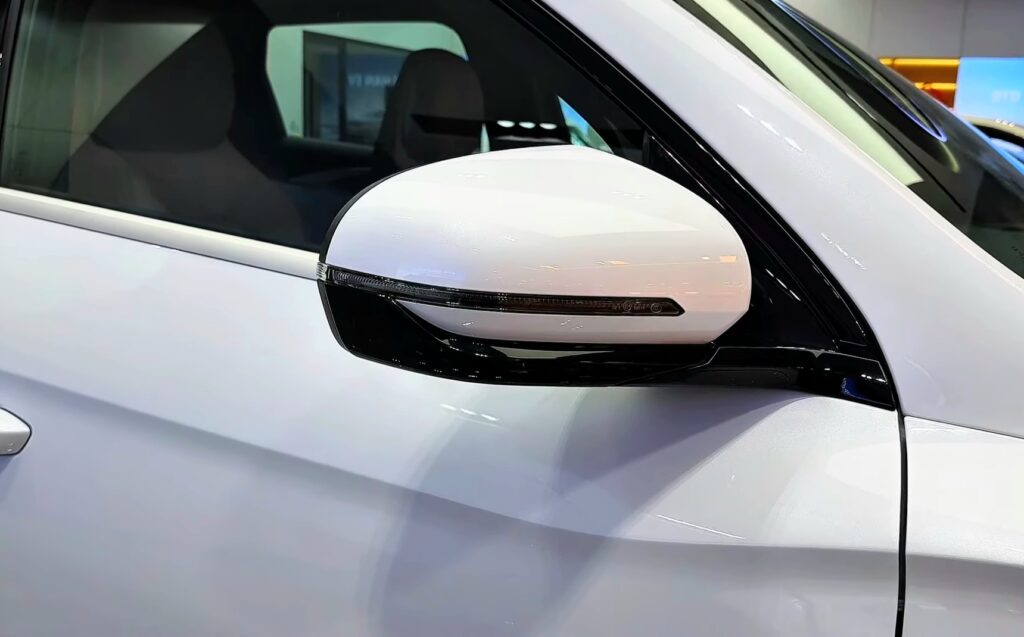
Measuring approximately 4,738mm in length with a 2,712mm wheelbase, it is physically substantial—longer than a Toyota RAV4—giving it a commanding road presence. The profile features a “floating roof” design with blacked-out pillars and silver roof rails, while the rear is finished with the brand’s signature full-width LED taillight bar. While it lacks the sporty coupe-SUV silhouette of the Sealion 6, its boxier, more upright stance promises better headroom and visibility, appealing to practical-minded buyers.
Interior & Technology
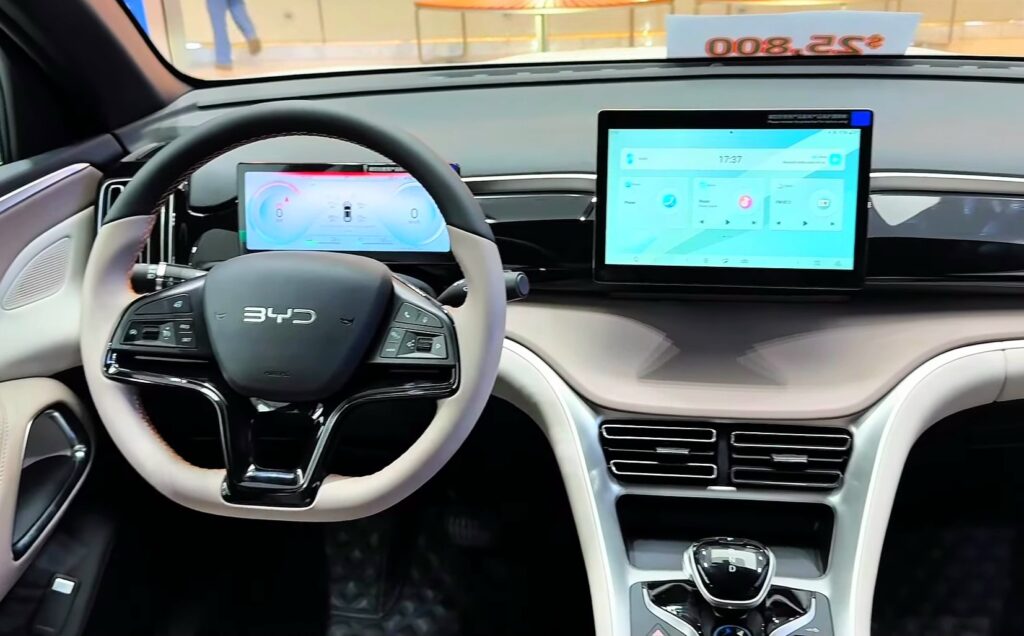
Inside, the Sealion 5 feels familiar to anyone who has sat in a recent BYD. The centerpiece is the trademark 12.8-inch rotating touchscreen infotainment system, which allows users to toggle between landscape (for navigation) and portrait (for apps like Spotify) orientations. It runs BYD’s latest DiLink software, which is responsive and supports wireless Apple CarPlay and Android Auto.
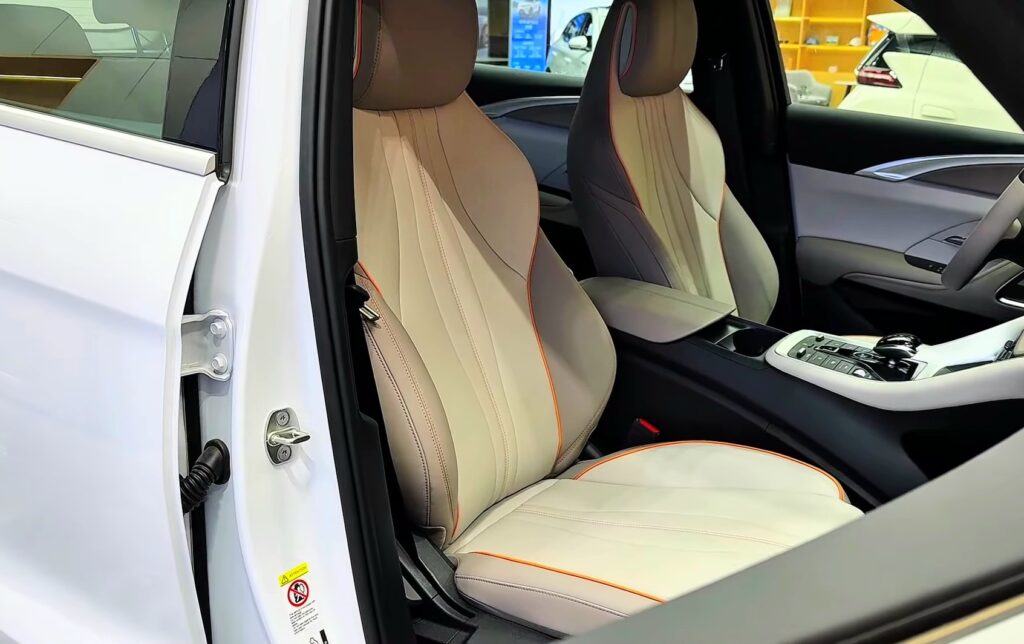
The cabin materials lean towards “premium economy”—plenty of soft-touch vegan leather and metallic accents, though some hard plastics appear lower down in the cabin. The front seats are sport-styled one-piece buckets, offering heating and ventilation in higher trims. Behind the steering wheel sits an 8.8-inch digital instrument cluster that provides essential driving data without clutter.
Practicality is a strong suit. The rear seats offer generous legroom thanks to the flat floor (a benefit of the dedicated EV platform origins), and rear passengers get their own air vents and USB charging ports. The boot space is rated around 463 liters with the seats up, expanding to over 1,400 liters with them folded flat—sufficient for a weekend family trip, though slightly smaller than some best-in-class rivals due to the battery placement.
Powertrain & Performance
The Sealion 5 is powered by BYD’s Super Hybrid DM-i (Dual Mode Intelligence) technology. This system prioritizes electric driving, using the petrol engine primarily as a generator.
- Engine: 1.5-liter naturally aspirated 4-cylinder petrol (72kW/122Nm).
- Motor: Single front-mounted electric motor producing 145kW and 300Nm.
- Battery Options: Buyers can typically choose between a 12.9kWh battery (Essential) or an 18.3kWh battery (Premium).
The driving stats are respectable for a family hauler. The sprint from 0-100 km/h takes roughly 7.7 to 8.3 seconds. More importantly, the pure electric range sits between 70km and 100km (NEDC) depending on the battery size. This allows most owners to complete their daily school runs and commutes without using a drop of petrol. When the battery is depleted, the car operates as a highly efficient hybrid, with fuel consumption figures hovering around a frugal 4.5L/100km.
Driving Experience
On the road, the Sealion 5 is tuned unapologetically for comfort. The suspension is soft and compliant, soaking up speed bumps and city potholes with ease. It feels floaty on the highway, a trait that makes for a relaxing long-distance cruiser but results in noticeable body roll if you tackle corners aggressively.
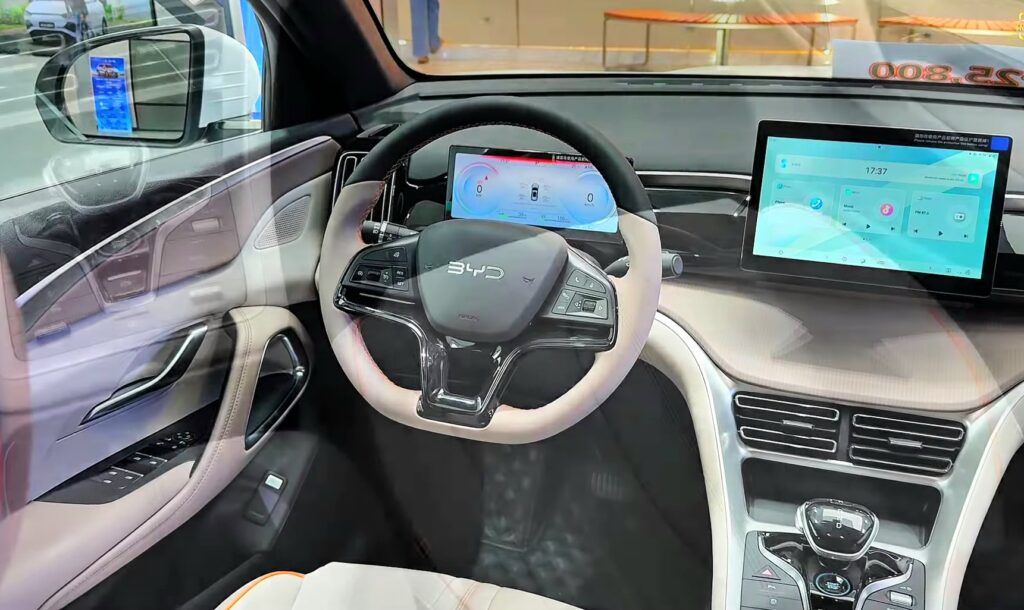
Unlike the Sealion 6, which offers an AWD performance variant, the Sealion 5 is strictly Front-Wheel Drive (FWD). Steering is light and effortless, making it easy to maneuver in tight parking lots, aided by a high-resolution 360-degree camera system. However, the stock tires (often eco-focused) can struggle for grip under hard acceleration on wet surfaces, a common trait in high-torque front-drive EVs.
Pricing & Global Availability
- MSRP (Global Est.): $33,990 – $37,990 USD (Prices vary by region; in the Philippines, it starts around ₱1,248,000).
- Trim Levels: Essential (Budget-focused) and Premium (Tech-focused).
- Value Verdict: It is currently one of the cheapest ways to get 100km of pure EV range in a family-sized SUV.
Pros and Cons
| ✅ Pros | ❌ Cons |
| Industry-leading battery safety (Blade Battery) | Gloss black interior trim smudges easily |
| Massive rear-seat legroom for adults | No spare tire (includes repair kit only) |
| V2L technology for outdoor camping | Engine drone when battery is under 20% |
| Best-in-class pricing for a PHEV | Soft suspension is comfortable but not “sporty” |
Who Should Buy It?
- Best for: Suburban families, ride-share drivers looking to save on fuel, and tech-savvy buyers who want “EV life” with a gasoline backup.
- Not ideal for: Driving enthusiasts who prefer a firm, European-style suspension or those who need 4WD/AWD for heavy off-roading.
Comparison with Others
| Model | Type | EV Range | Price (Est. USD) |
| BYD Sealion 5 | PHEV | 100 km | $34,000 |
| Toyota RAV4 PHEV | PHEV | 75 km | $58,000 |
| MG HS PHEV | PHEV | 63 km | $42,000 |
| GWM Haval H6 | PHEV | 110 km | $40,000 |
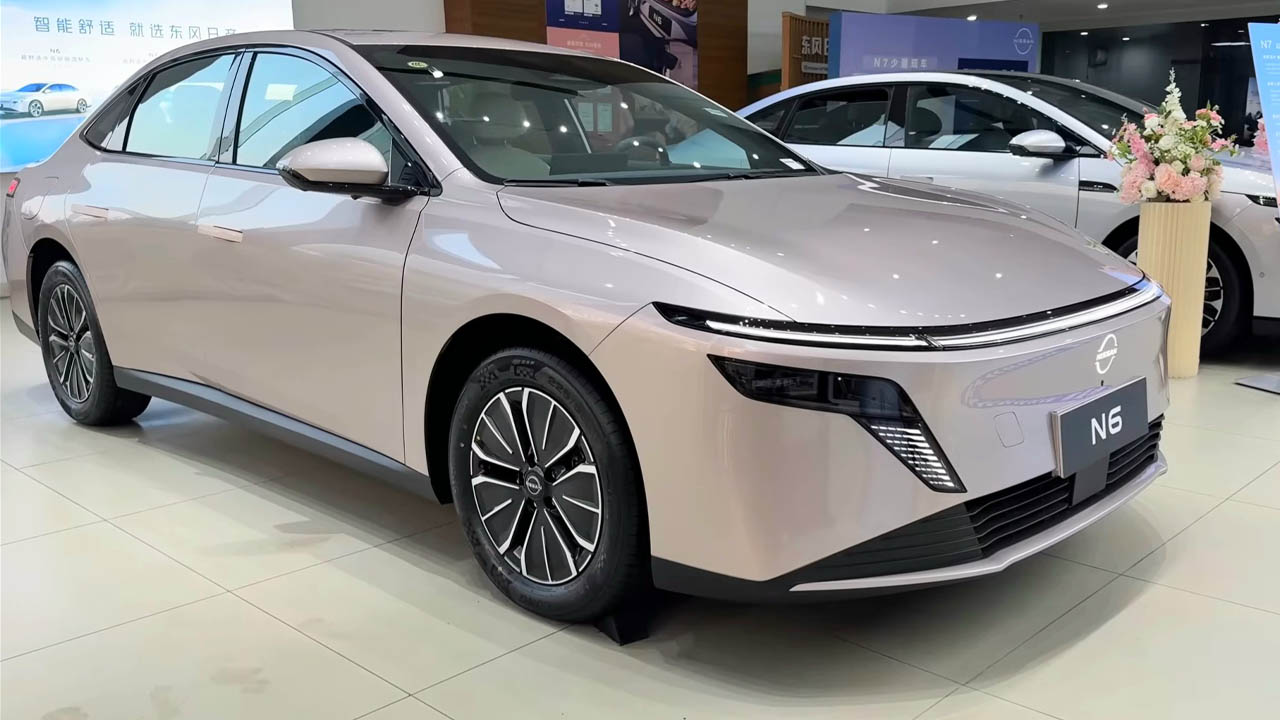
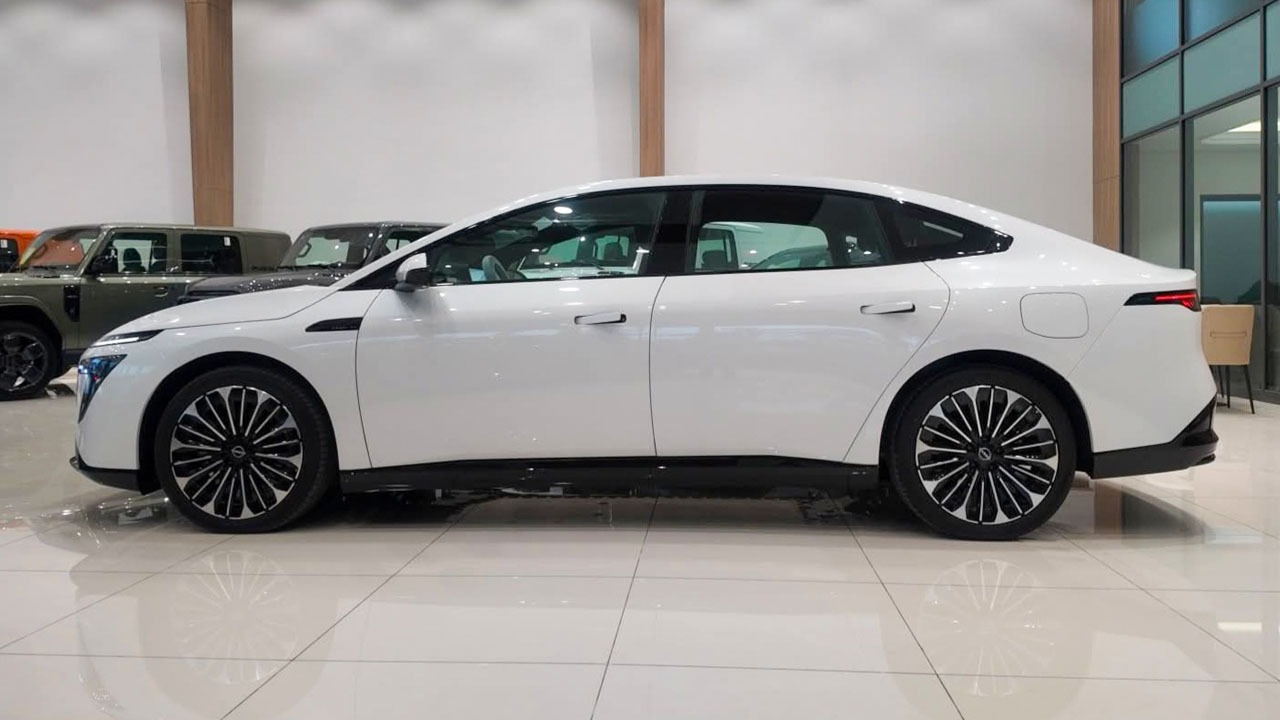
| Nissan N6 | PHEV | 180 km | $15,000* (*Sedan Class) |
Verdict
The BYD Sealion 5 is a pragmatic addition to the lineup. It strips away some of the performance excess of the Sealion 6 to offer a more affordable, efficiency-focused package. While it may lack the sharp handling of a Mazda CX-5 or the rugged reputation of a RAV4, it counters with superior tech, a smoother EV-like powertrain, and the flexibility of V2L (Vehicle-to-Load) capabilities that can power camping gear or laptops.
For families seeking to lower their fuel bills without the range anxiety of a full EV, the Sealion 5 presents a compelling value proposition. It is a comfortable, tech-laden sanctuary that asks very little of its driver, making it an easy recommendation for the daily grind.
Frequently Asked Questions (FAQ)
1. What is the difference between the BYD Sealion 5 “Essential” and “Premium” trims?
The main difference is the battery capacity and interior tech. The Essential trim features a 12.9 kWh battery (71 km EV range) and a 10.1-inch screen, while the Premium trim upgrades to an 18.3 kWh battery (100 km EV range), a larger 12.8-inch rotating touchscreen, and added comforts like a wireless phone charger and 360° camera.
2. How long does it take to charge the BYD Sealion 5?
Using a standard 7kW Home Wallbox, a full charge takes approximately 2.5 to 3.5 hours depending on the battery size. While many PHEVs in this price bracket do not support DC fast charging, the Sealion 5 is designed for easy overnight or workplace charging to maximize its “electric-first” fuel savings.
3. Can I drive the Sealion 5 if the battery is completely empty?
Yes. As a Super Hybrid (PHEV), the car will automatically switch to “Hybrid Mode” once the battery reaches a low state (typically around 25%). The 1.5L gasoline engine will then act as a generator to power the electric motor and charge the battery, ensuring you never get stranded.
4. What is the “V2L” feature and how do I use it?
V2L (Vehicle-to-Load) allows the Sealion 5 to act as a mobile power bank. By plugging a specific adapter into the car’s charging port, you can power standard household appliances (up to 3.3kW) like coffee makers, laptops, or projectors—making it an ideal companion for camping or emergency power outages.
5. What kind of warranty does BYD provide for the Sealion 5 in 2026?
BYD typically offers a robust global warranty package: 6 years or 150,000 km for the vehicle itself, and a specialized 8-year or 160,000 km warranty for the Traction Battery (Blade Battery). This warranty is usually transferable to the next owner, helping maintain the car’s resale value.
Disclaimer
Disclaimer: Specifications and pricing are based on 2026 global market data. Features and warranties may vary by country. Please consult your local BYD dealer for regional specifics.