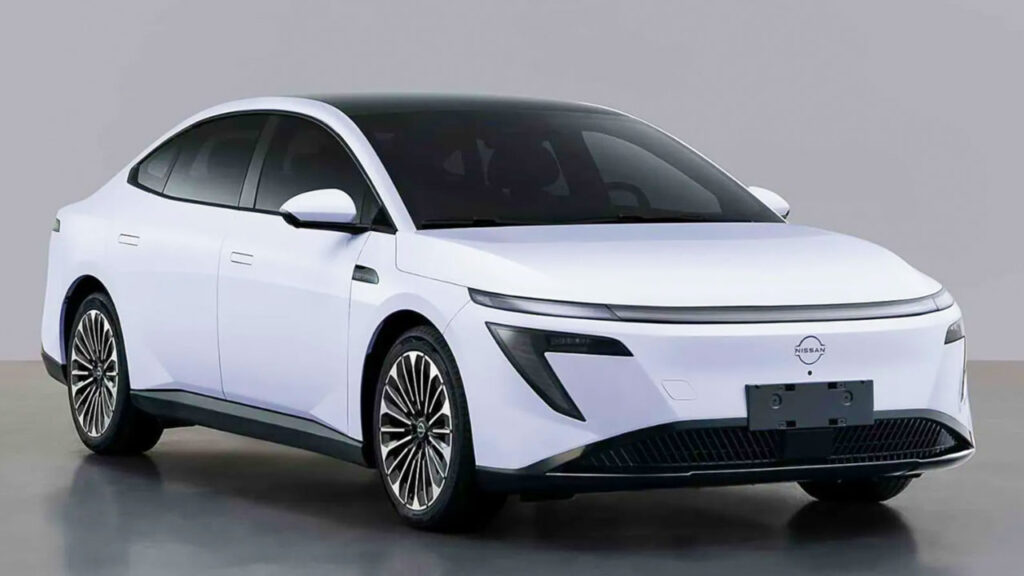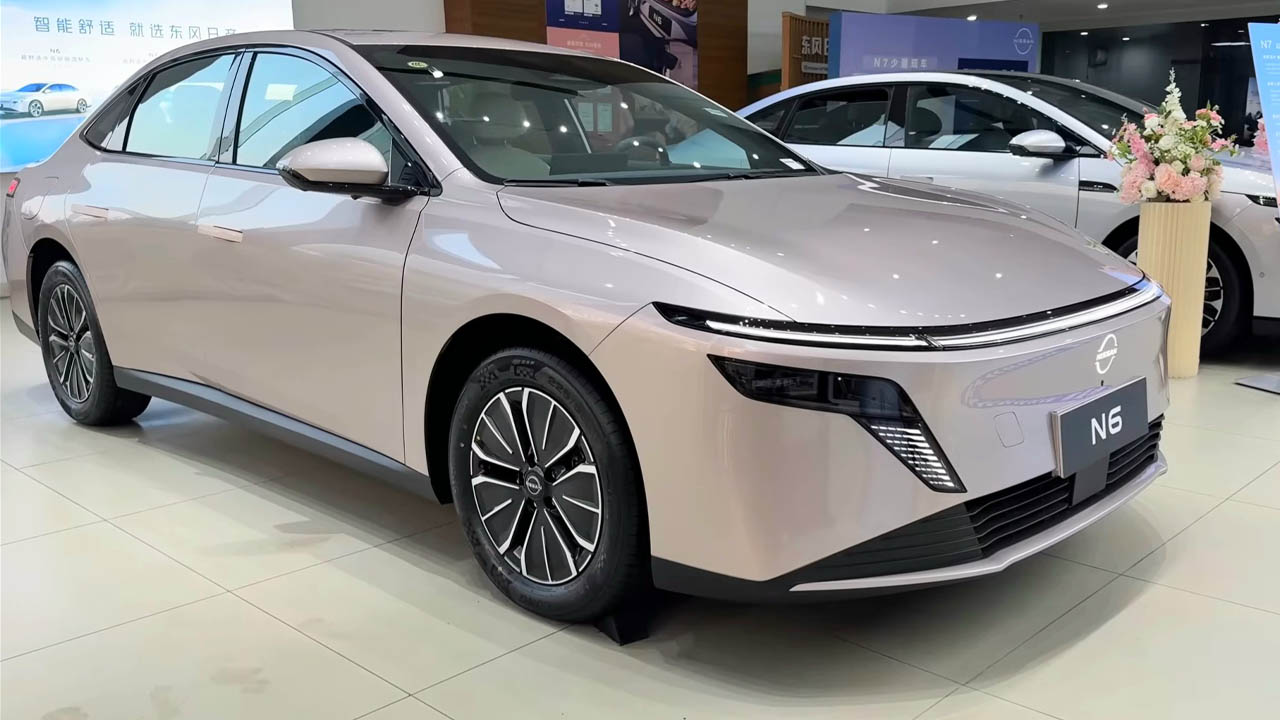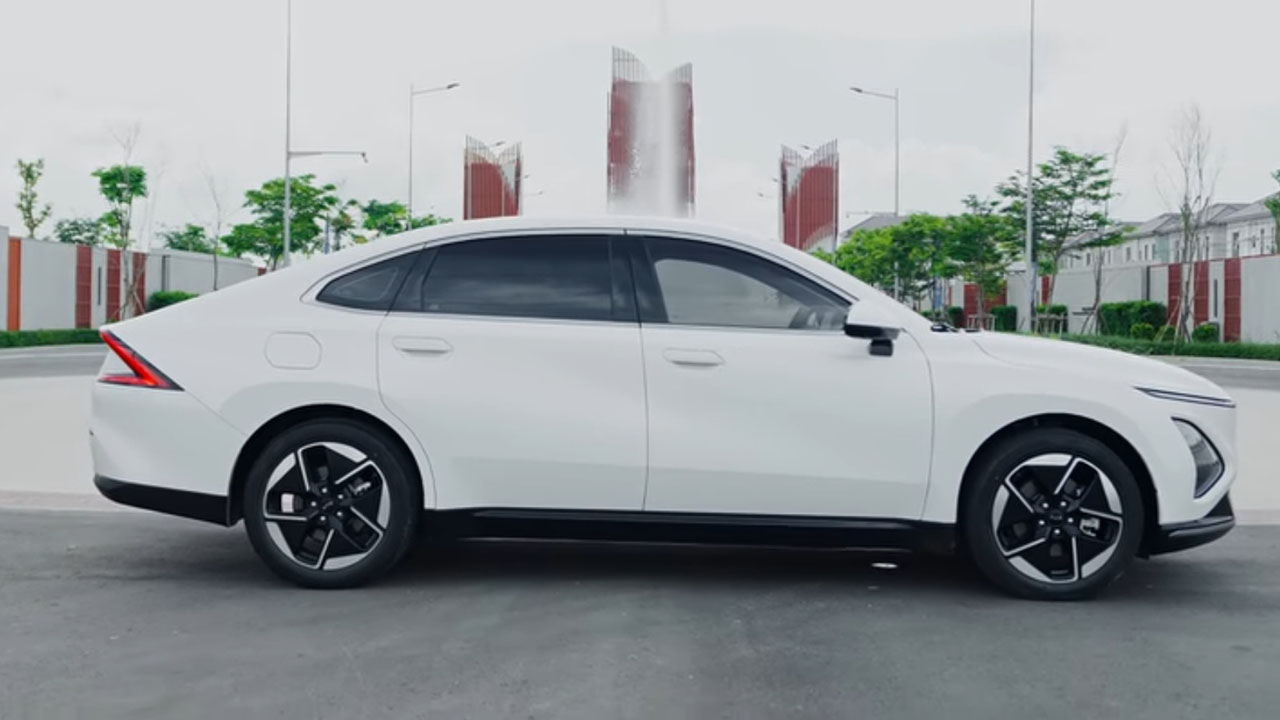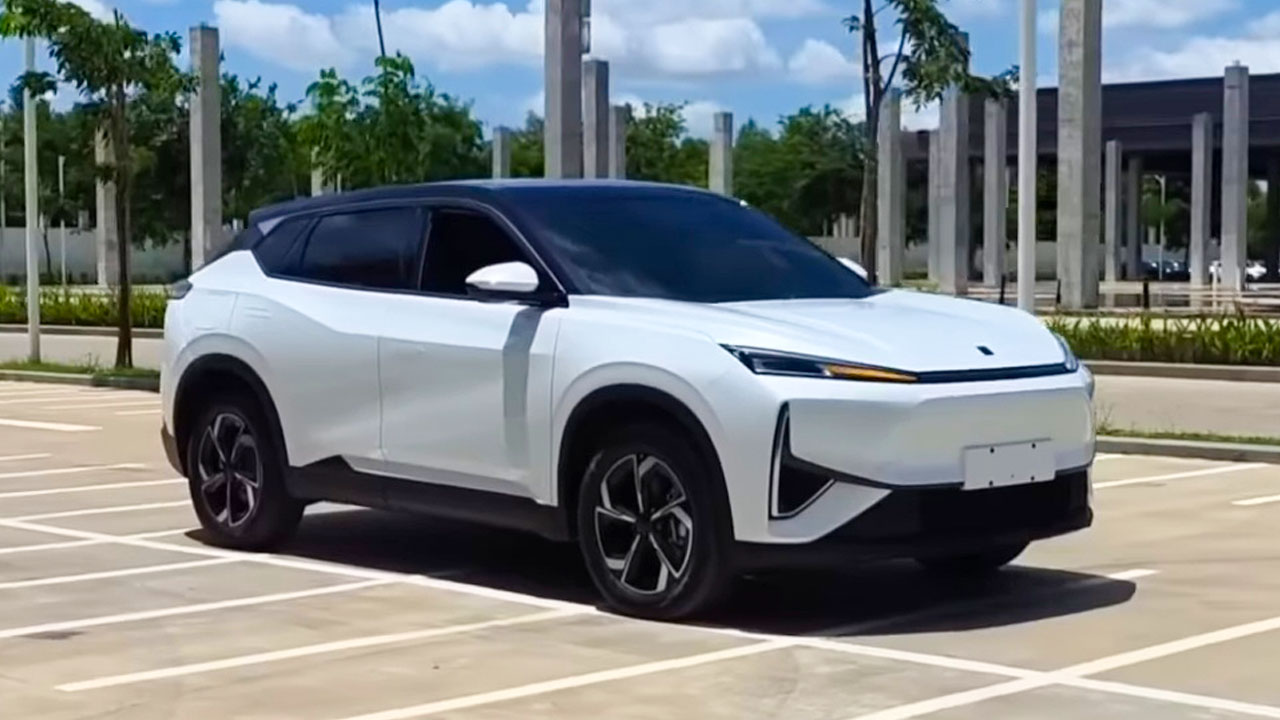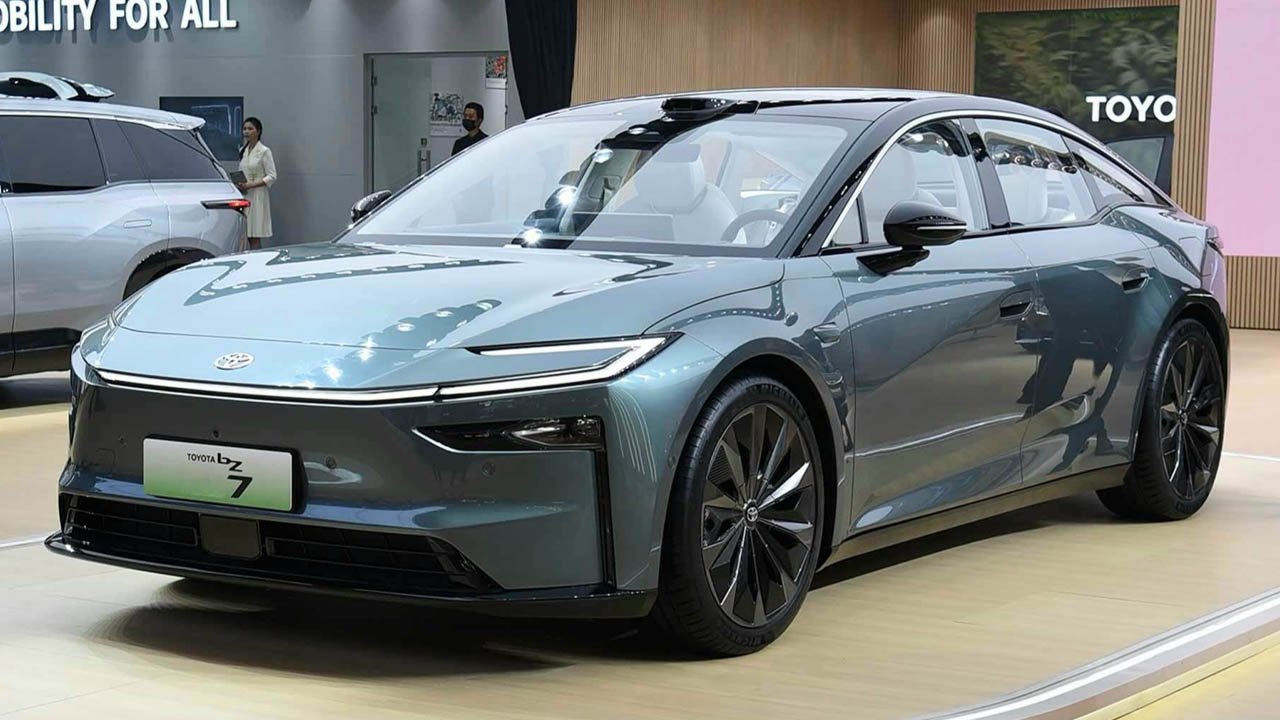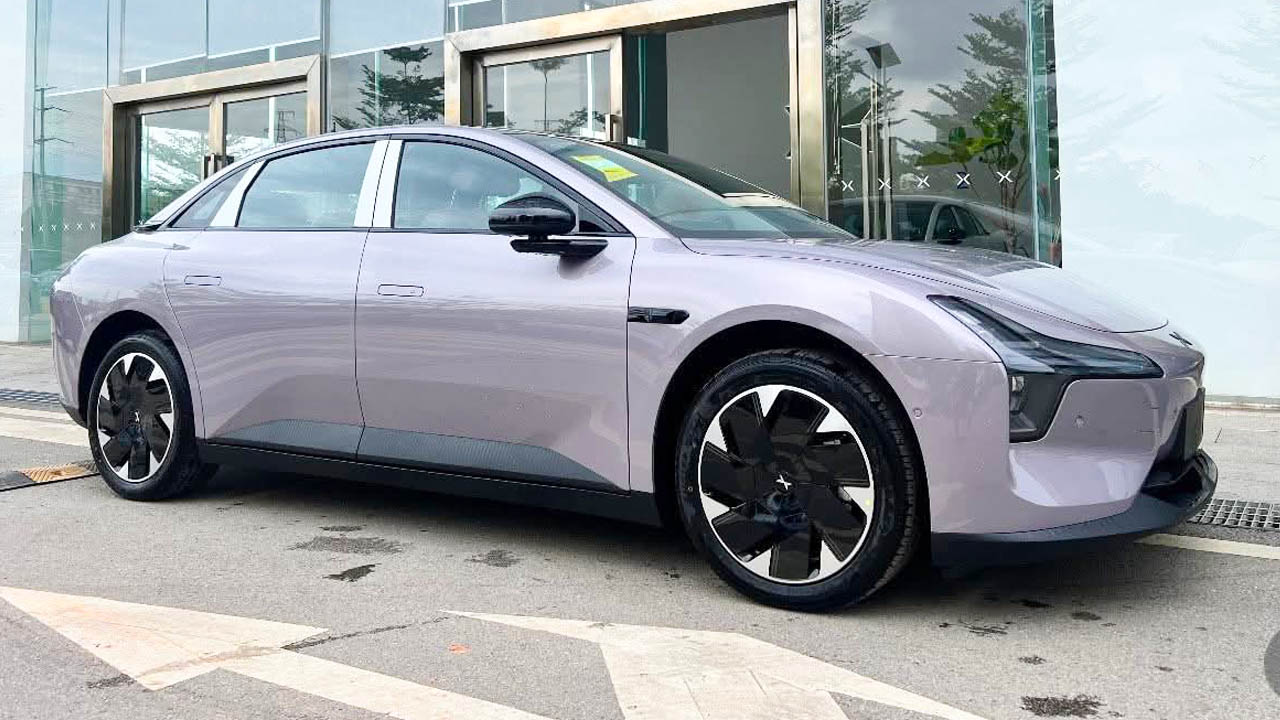
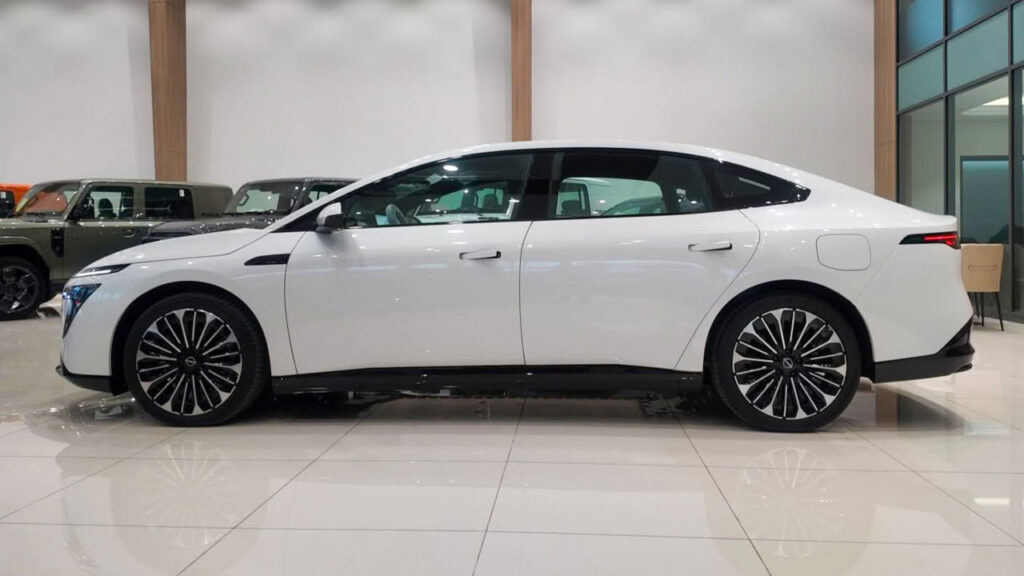
The Nissan N7 represents a critical component of Nissan’s global electrification push, particularly within the competitive mid-to-large-size sedan segment. Developed and produced through the Dongfeng Nissan joint venture in China, the N7 is engineered to blend Nissan’s established reputation for ergonomics and reliability with cutting-edge electric vehicle (EV) technology and striking, modern design elements.
The 2026 Nissan N7 is the first production model born from Nissan’s “Tianyan” EV architecture, a platform specifically designed to reclaim ground in the high-stakes electric sedan market. Rather than chasing the hyper-performance metrics of sports cars, Nissan has returned to its roots by focusing on radical comfort and software-led luxury.
Full Specifications Table (2026 Nissan N7)
| Feature | 510 Air/Pro (Base) | 625 Pro/Max (Long Range) |
| Battery (LFP) | 58 kWh | 73 kWh |
| Drive Layout | Front-Wheel Drive (FWD) | Front-Wheel Drive (FWD) |
| Power Output | 160 kW (215 hp) | 200 kW (268 hp) |
| Charging (30%-80%) | ~14 Minutes | ~14 Minutes |
| Wheelbase | 2,915 mm | 2,915 mm |
| Dimensions | 4,930 x 1,895 x 1,487 mm | 4,930 x 1,895 x 1,487 mm |
Exterior Design and Dimensions
The N7 is a substantial vehicle, measuring 4,930 mm in length, 1,895 mm in width, and 1,487 mm in height, with a long wheelbase stretching 2,915 mm. These dimensions place it in contention with rivals like the Tesla Model 3 and Volkswagen ID.7, though the N7 is notably longer and offers impressive cabin volume.
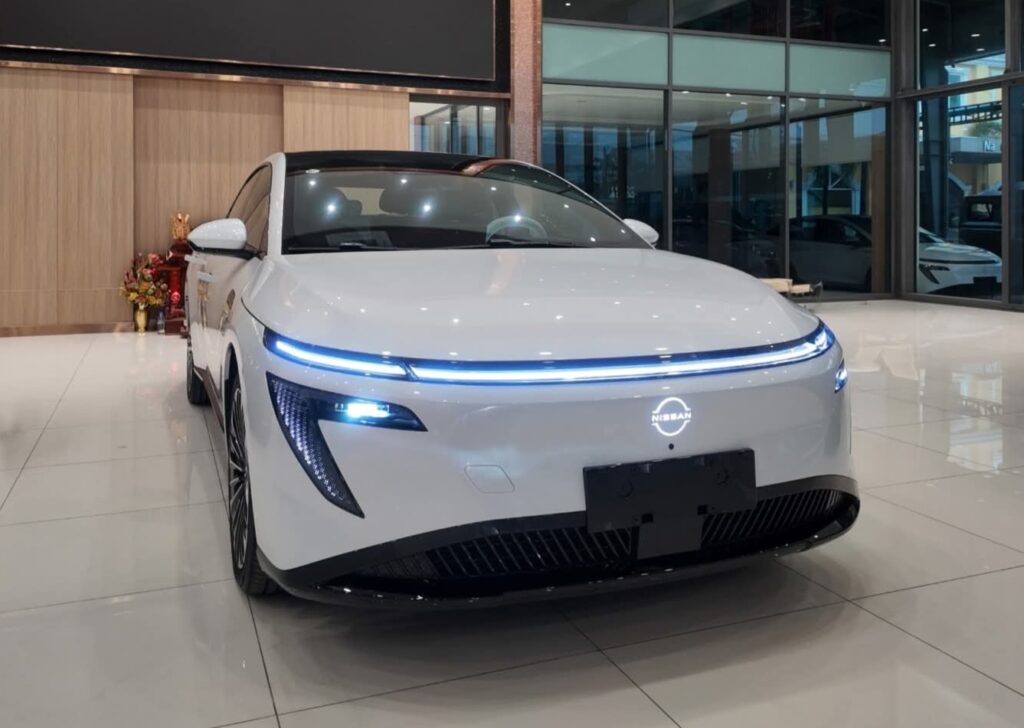
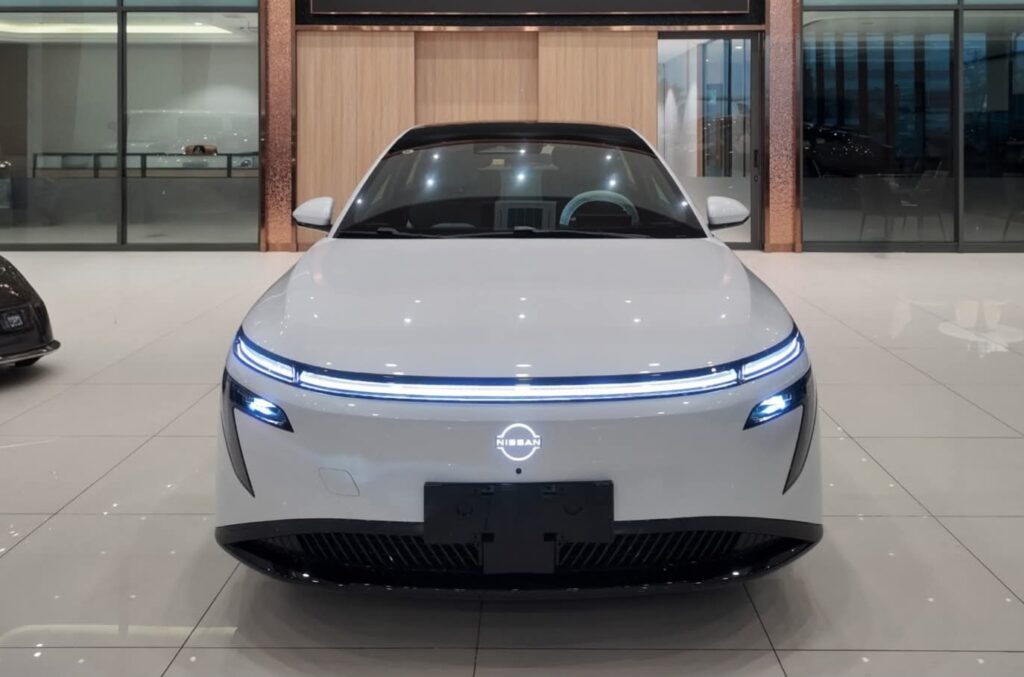
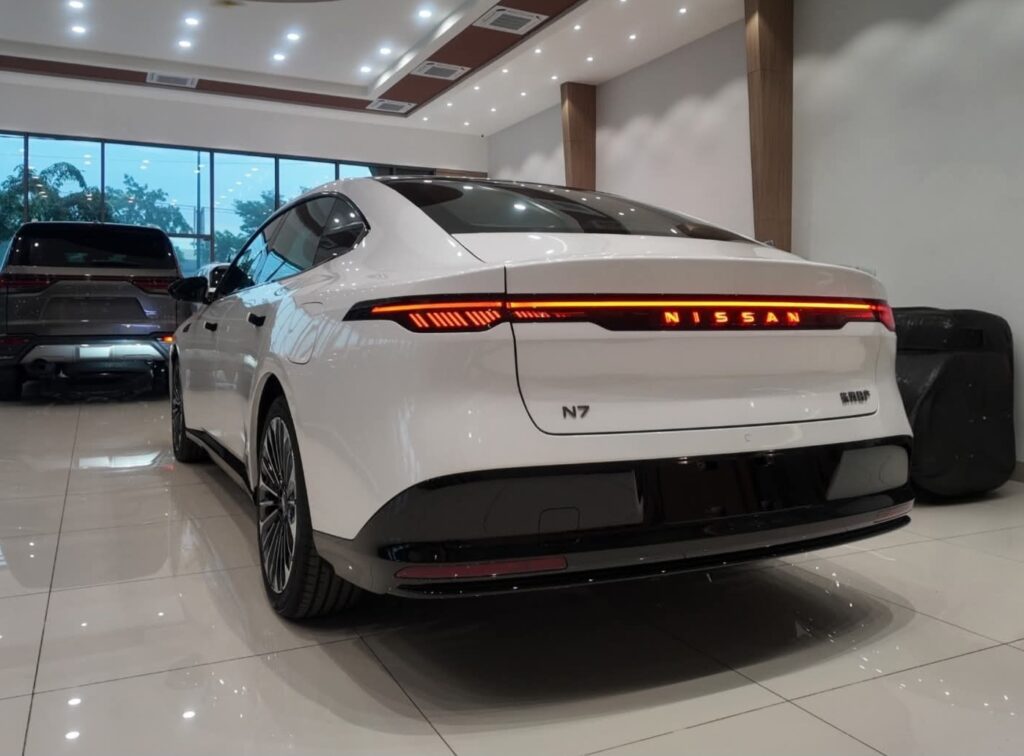
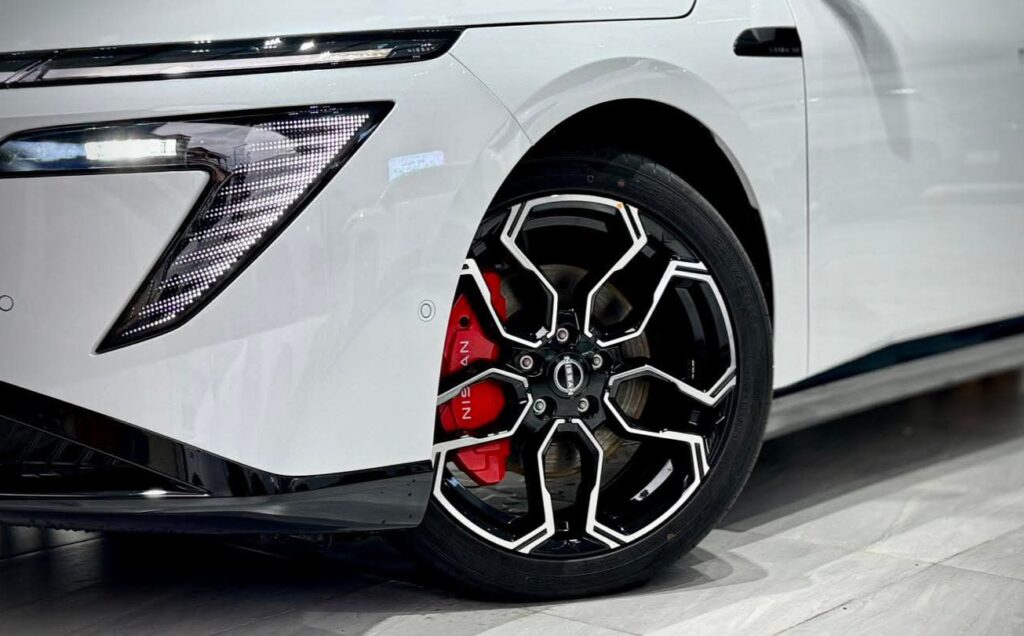
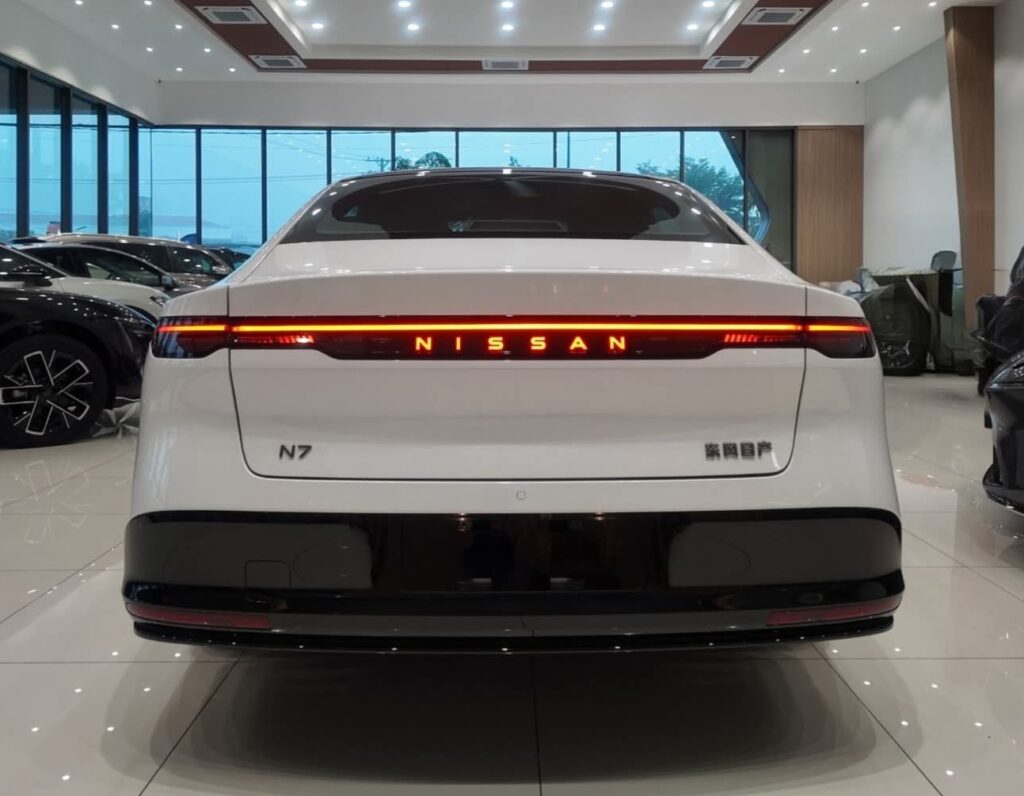
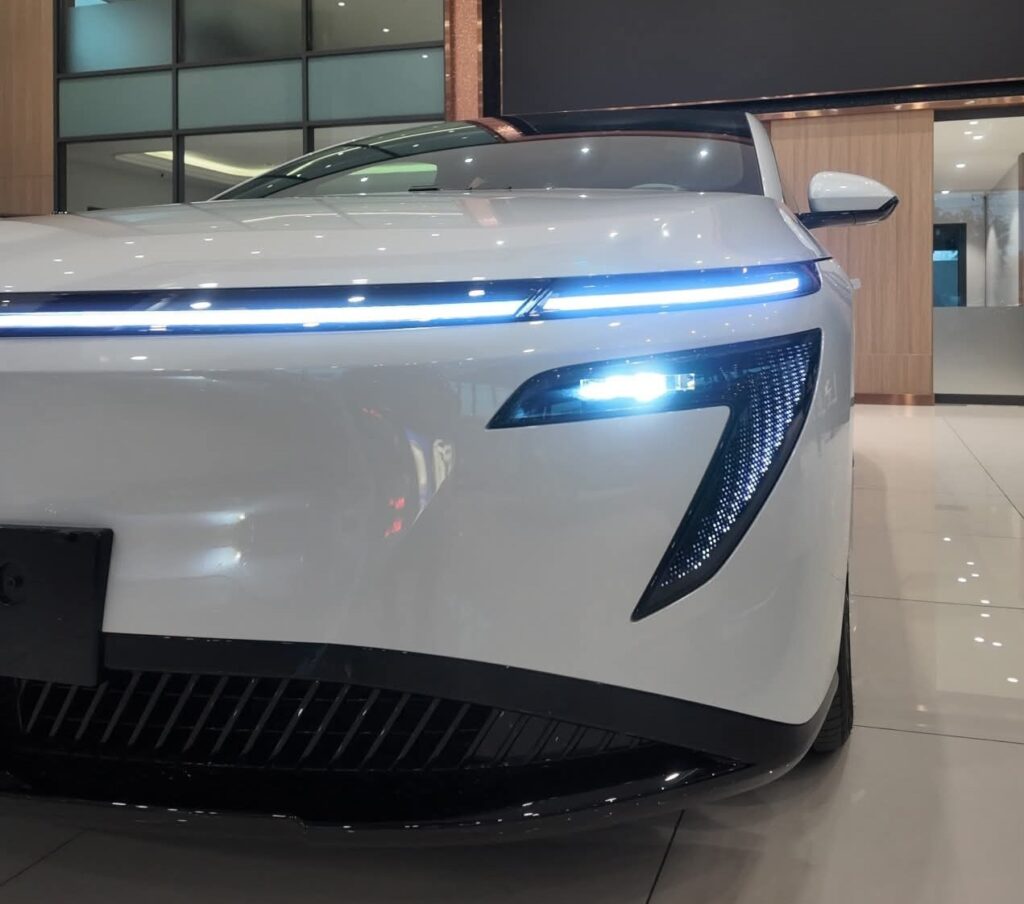
Styling utilizes a refreshed interpretation of Nissan’s V-Motion design language, adapted for the EV era with a sleek, closed-off front fascia. The profile is defined by a dynamic fastback roofline, frameless doors, and flush-mounted door handles, contributing to an impressive ultra-low drag coefficient of just 0.208 Cd. A key feature is the advanced light system: higher trims boast a unique “Magic Canvas” function, allowing the front (710 high-power LEDs) and rear (882 OLED units) light panels to display customizable messages or patterns, adding a distinct, high-tech character.
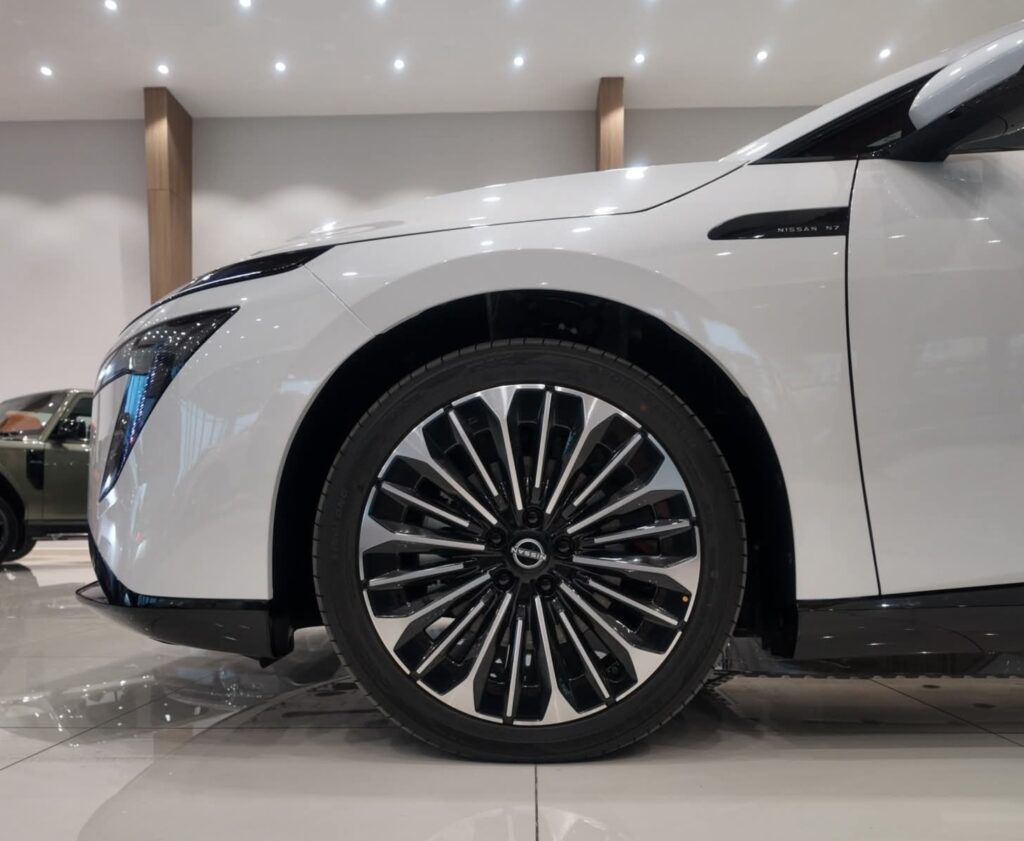
Exterior: The N7 features a “Seamless One-Piece” design with a class-leading drag coefficient of $0.208 $. It is characterized by its “V-Motion” digital face, featuring a full-width LED bar composed of 710 high-power light beads and a customized “light language” interaction system. It rides on either 17-inch or aero-optimized 19-inch wheels.
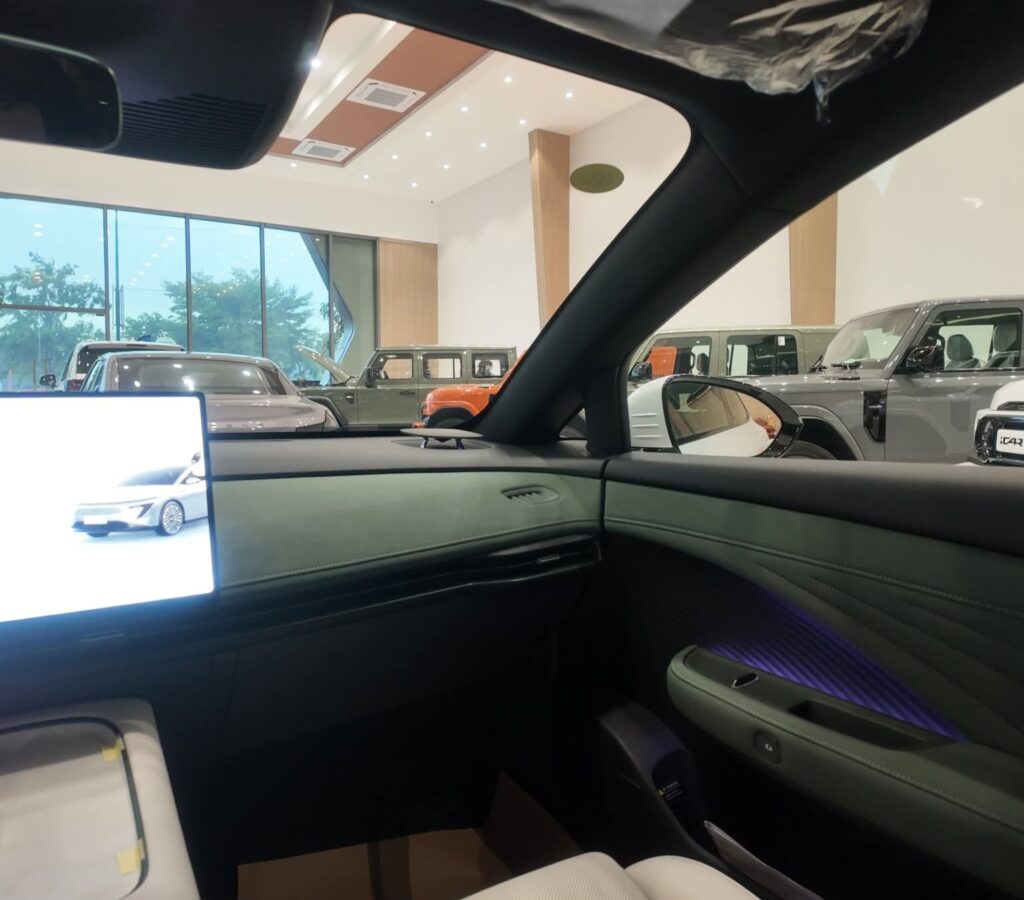
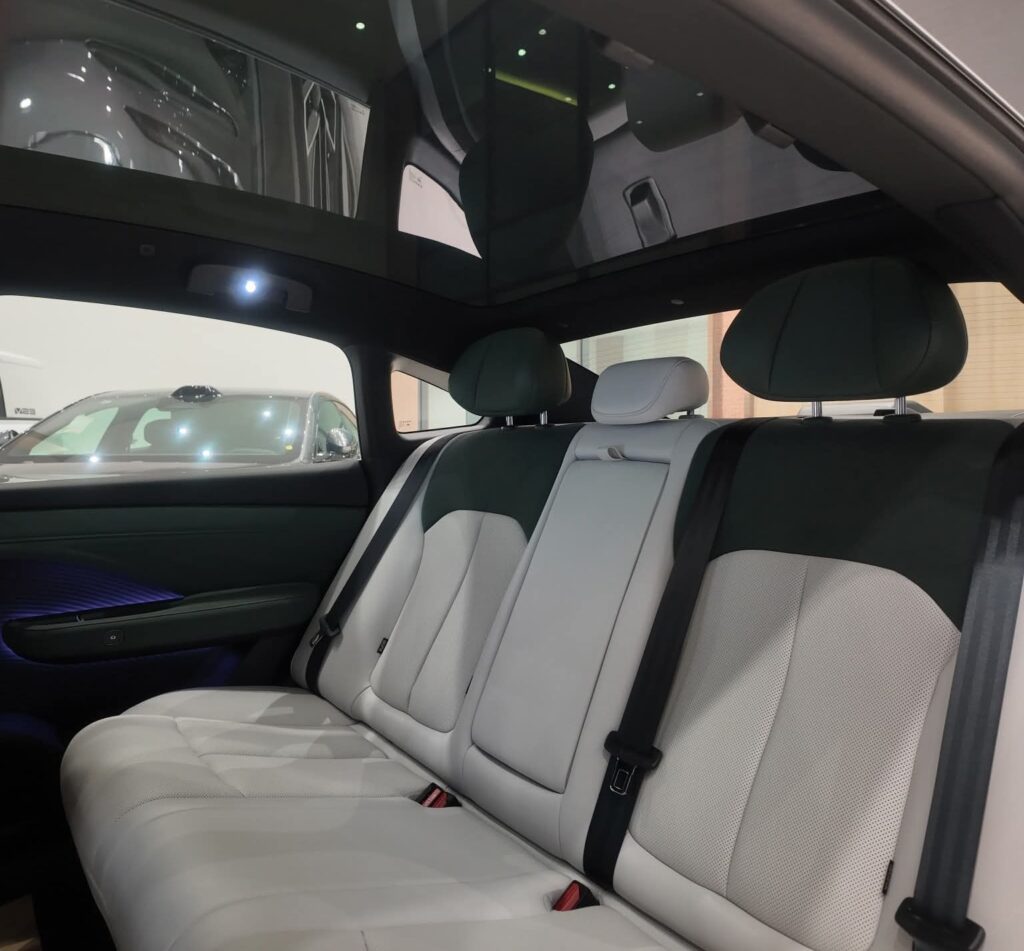
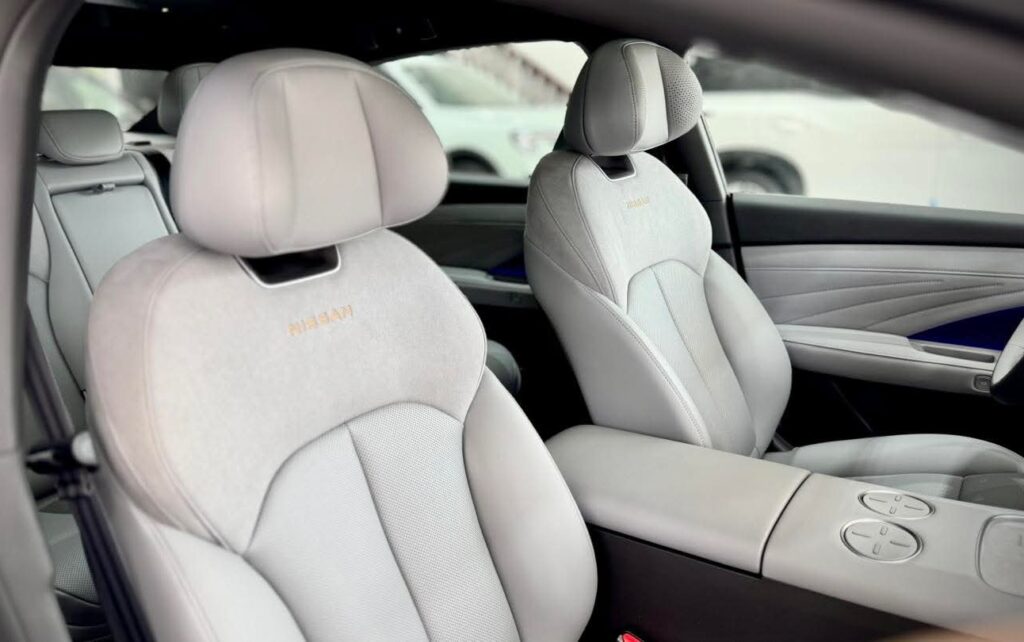
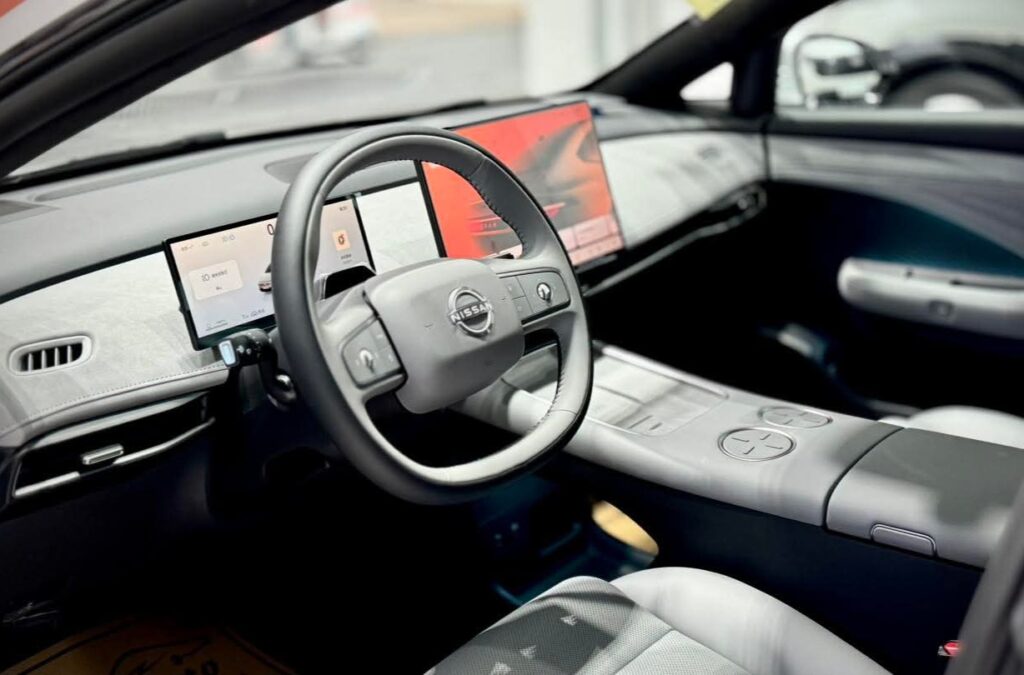
The Cabin: The interior leans heavily into Luxury-Tech. It features the “Zero-Pressure Cloud Carpet” seat system, which uses 49 sensors to automatically adjust bolster support based on your body type. The materials are a premium mix of Alcantara and microfiber, providing a “living room” feel rather than a cold cockpit. Rear legroom is vast, thanks to a 2,915 mm wheelbase that rivals the BMW i5.
Cargo Space: The trunk offers a generous 504 Liters (17.8 Cubic Feet). While the fastback shape is sleek, the boot remains deep and practical for family luggage.
Interior Focus on Comfort and Technology
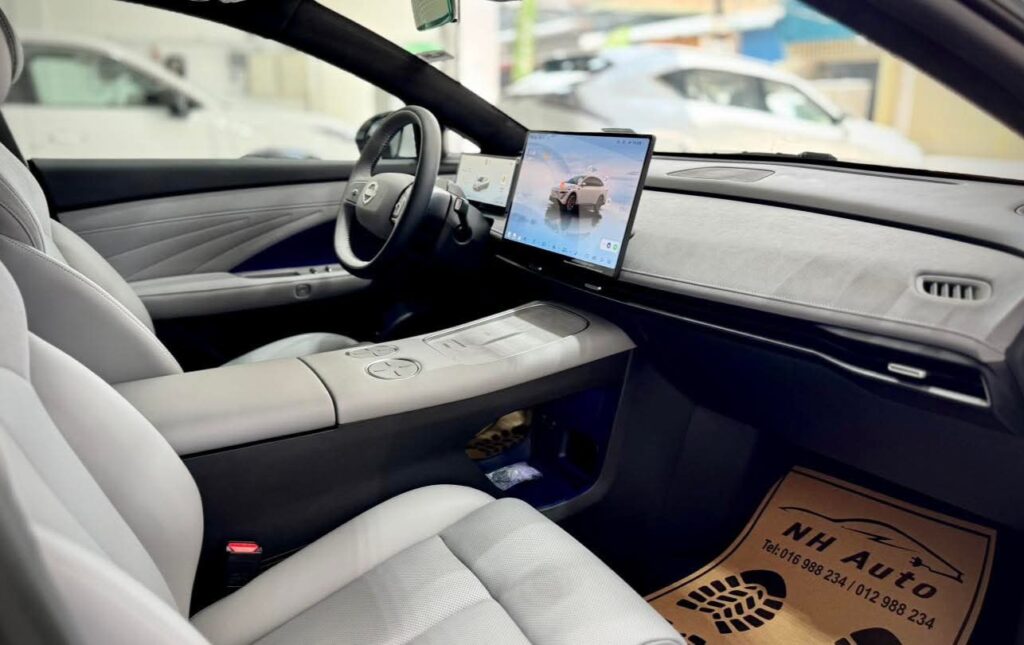
Inside, the N7 prioritizes comfort and digital integration. The centerpiece of the cabin is a floating 15.6-inch 2.5K HD central touchscreen paired with a 10.25-inch fully digital instrument cluster. The infotainment system runs on the new NISSAN OS, powered by high-performance Qualcomm Snapdragon chips (either the 8155 or the range-topping 8295P). This powerful hardware ensures smooth operation, robust AI voice assistance, and comprehensive connectivity, supporting services like HiCar, Carlink, and Apple CarPlay. Practical features, such as a 50W wireless charging pad and even an integrated refrigerator on select Max trims, enhance convenience for family users.
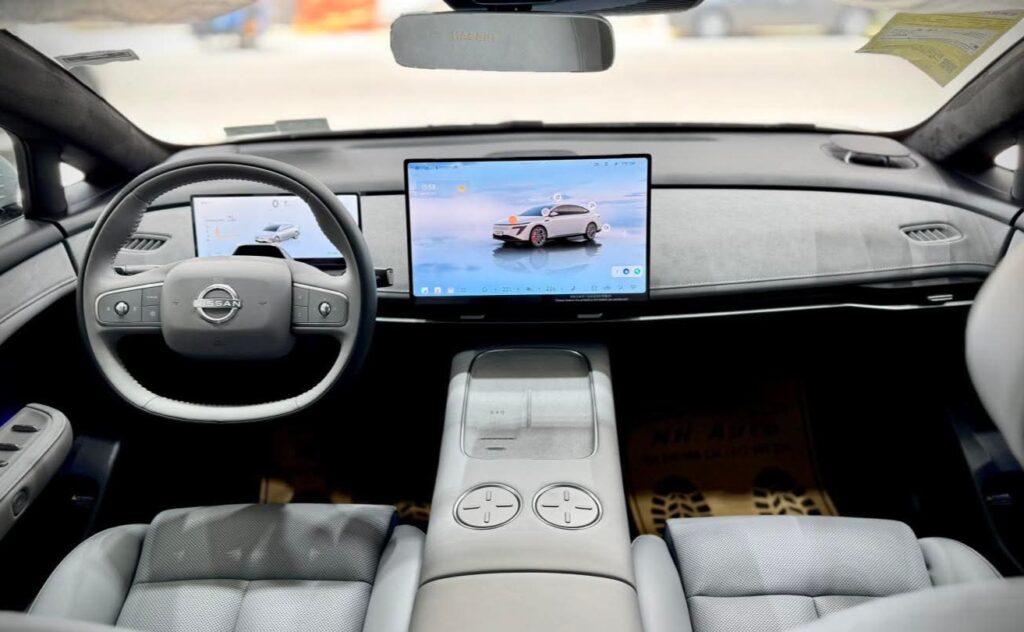
The commitment to passenger well-being is highlighted by the advanced seating system. Max trims feature “AI Zero-Pressure Cloud Seats,” which integrate up to 49 sensors and air cushions that adaptively adjust in real-time to the occupant’s body, providing superior support. Furthermore, the entire cabin environment is built using low-emission, “Zero Formaldehyde” certified materials, appealing directly to health-conscious family buyers.
Powertrain, Range, and Charging
The Nissan N7 offers two front-motor, front-wheel-drive powertrain configurations, both utilizing Lithium Iron Phosphate (LFP) batteries sourced from Sunwoda:
Standard Range: Equipped with a 58 kWh battery and a 160 kW (215 hp) electric motor, delivering a CLTC (China Light-Duty Vehicle Test Cycle) range of 510–540 km.
Extended Range: Features a 73 kWh battery and a more powerful 200 kW (268 hp) motor, achieving a competitive CLTC range of 625–635 km.
The focus of the performance tuning is on real-world usability and a smooth driving experience rather than extreme acceleration, with the higher-spec version reaching 100 km/h in approximately 6.9 seconds. Crucially, the N7 supports ultra-fast DC charging, enabling a recharge from 30% to 80% in a rapid 14 to 19 minutes, minimizing charging downtime.
Advanced Driver Assistance Systems (ADAS)
To remain competitive in the smart EV space, Nissan partnered with autonomous driving specialist Momenta to integrate a sophisticated Level 2+ driver assistance suite, available on the Max variants. This system includes features like high-speed Navigate on Autopilot (NOA), adaptive cruise control, automatic lane changes, and advanced obstacle avoidance, all designed to make long-distance and urban driving easier and safer.
Market Position and Outlook
Launched in China in April 2025 with an aggressive starting price from just 119,900 yuan (approximately $16,500 USD), the N7 was an immediate commercial success. It quickly became the fastest joint-venture pure electric car to surpass 10,000 firm orders in the Chinese market, with initial data showing that over 70% of buyers were new to the Nissan brand.
This overwhelming domestic reception has confirmed Nissan’s decision to export the N7 globally, positioning it as a key model in the company’s worldwide product restructuring under the “The Arc” plan. The N7’s blend of attainable pricing, superior interior comfort, and advanced technology makes it a strong contender against both established and emerging EV rivals.
Who Should Buy the Nissan N7?
- The “Anti-Motion Sickness” Family: If your passengers often feel nauseous in EVs due to sudden torque or aggressive regenerative braking, the N7’s specialized torque-management system makes it a must-buy.
- The Comfort-First Commuter: If you value a “Moving Sofa” experience over a “Race Track” one. The AI Zero-Pressure Cloud Carpet seats are designed for maximum fatigue reduction during long highway hauls.
- The Value-Seeking Executive: Those who want a car with the physical presence of a BMW i5 or Nissan Maxima but the price tag of a compact sedan.
Comparison Table: 2026 Nissan N7 with Others models
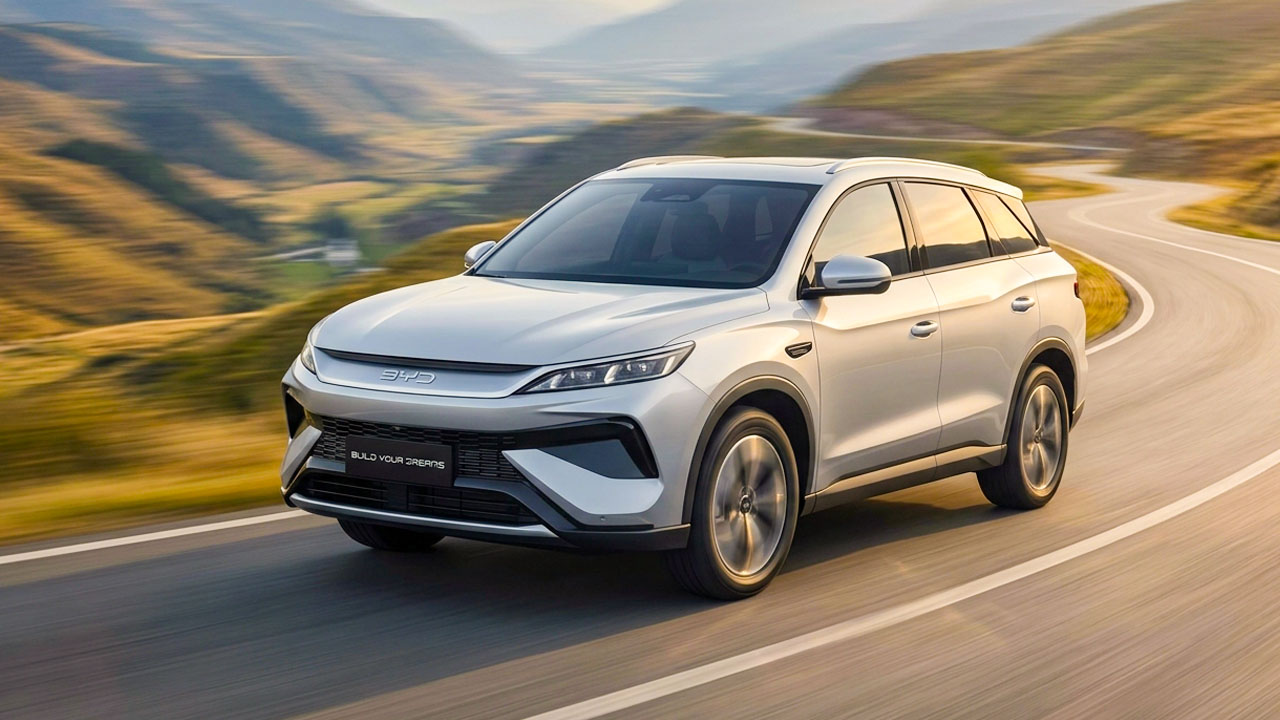
| Feature | Nissan N7 (2026) | Tesla Model 3 | BYD Han EV | Xiaomi SU7 | VW ID.7 |
| Length | 4,930 mm | 4,720 mm | 4,995 mm | 4,997 mm | 4,961 mm |
| Philosophy | Ultimate Comfort | Tech & Performance | Luxury Value | Sport & Ecosystem | German Build |
| Max Range (CLTC) | 635 km | 606 – 713 km | 610 – 715 km | 700 – 830 km | ~700 km |
| Chipset | Snapdragon 8295P | Tesla Custom | Snapdragon 8155 | Snapdragon 8295 | VW Software 4.0 |
| Drive Type | FWD (Front) | RWD / AWD | FWD / AWD | RWD / AWD | RWD / AWD |
| Cargo (Trunk) | 504 Liters | 594 Liters (Total) | 410 Liters | 517 Liters | 532 Liters |
Pros and Cons
| ✅ Pros | ❌ Cons |
| AI Smart Seats: 49 sensors proactively adjust support to your body in real-time. | Front-Wheel Drive Only: Lacks the “sporty” rear-drive feel or AWD power of rivals. |
| Super-Slippery Design: At $0.208 Cd$, it is one of the world’s most aerodynamic sedans. | Limited Fast Charging: Uses a 400V platform while competitors are moving to 800V. |
| Anti-Nausea Tech: Smooth torque curves prevent the “EV jerk” that causes motion sickness. | No Frunk: Front space is used for the advanced AI cooling and 3C battery tech. |
| Price Disruptor: Provides mid-to-large luxury for the price of a budget compact car. | Legacy Brand Software: While improved, it still lacks the deep app ecosystem of Xiaomi or Huawei. |
Final Verdict
The 2026 Nissan N7 is a rare “turnaround” vehicle. It doesn’t try to beat Tesla at speed; instead, it beats everyone at well-being. It is a masterclass in ergonomics, offering a ride so smooth it practically cures the motion sickness associated with modern EVs. For families who want a massive, reliable, and high-tech electric sedan without the “boy racer” performance or a $50,000 price tag, the N7 is arguably the smartest choice in the 2026 market.
FAQ (Frequently Asked Questions)
1. Is the Nissan N7 a good family car?
Yes, it is specifically marketed as the “most family-friendly” EV sedan. Its 2,915mm wheelbase provides rear legroom comparable to luxury limousines, and its AI air-purification and quiet cabin make it ideal for children and long trips.
2. How long does it take to charge?
The N7 supports 3C fast charging. Under optimal conditions, it can charge from 10% to 80% in approximately 19 minutes. A 15-minute “flash charge” can add roughly 300–400 km of range.
3. What are the main competitors?
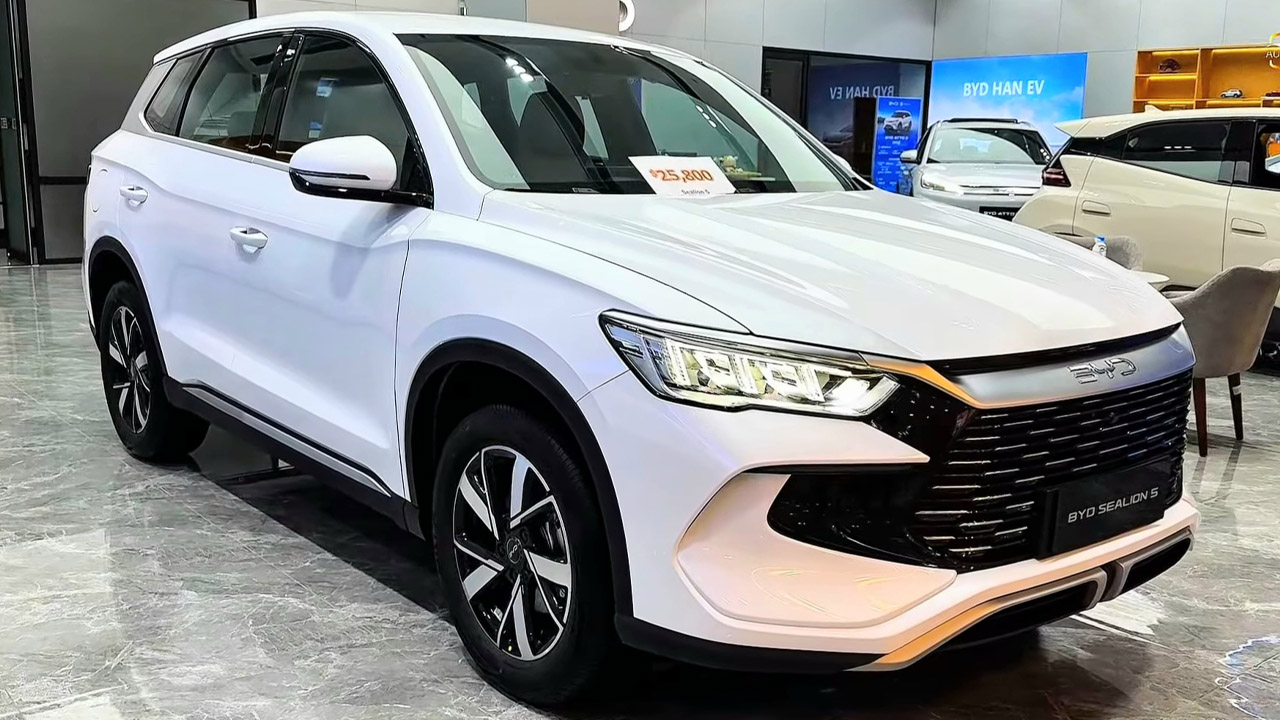
It competes directly with the Tesla Model 3, BYD Han EV, and the Xiaomi SU7. In terms of size and comfort, it also targets buyers who would traditionally look at a Volkswagen ID.7.
4. What is “Zero-Pressure Cloud Carpet”?
It is Nissan’s new seating technology. It uses AI to monitor your posture via hidden pressure sensors and micro-adjusts the seat’s firmness and shape to ensure your spine is perfectly supported, preventing back pain on long drives.
5. Is the Nissan N7 available globally?
Currently, it is a flagship for the Chinese and Japanese markets (launching late 2025/early 2026). Export versions for Southeast Asia, the Middle East, and parts of Europe are expected throughout late 2026.
Disclaimer
Disclaimer: This review is based on a Technical Analysis of the production specifications and official press releases from the Dongfeng-Nissan Tianyan Architecture launch. Specifications, regional software features (like ADAS levels), and final pricing may vary significantly by market. Always check with your local authorized Nissan dealer for the most accurate regional information.