
This 5 Step to speed up your computer fast, There is nothing quite as frustrating as a computer that takes ages to boot up, freezes mid-task, or turns a simple web browsing session into a test of patience. In today’s fast-paced digital world, a sluggish PC or laptop can severely dent your productivity and peace of mind.
Before you start budgeting for an expensive new machine, it is important to know that most speed issues are caused by software clutter, unoptimized settings, or manageable system strain rather than failing hardware. With a bit of digital maintenance, you can often restore your computer’s snappy performance.
Here is a comprehensive, step-by-step guide to troubleshooting and speeding up your slow computer today.
Step 1: Manage Your Startup Programs
If your computer takes several minutes to become usable after you press the power button, you likely have too many applications demanding resources the second the operating system loads. Many apps automatically configure themselves to launch at startup during installation, often without your explicit consent.
- For Windows Users: Press Ctrl + Shift + Esc to open the Task Manager, then navigate to the Startup apps tab. Review the list and look at the “Startup impact” column. Right-click and select Disable for any non-essential software (like Spotify, Discord, or cloud storage clients you don’t use daily). Don’t worry—this won’t delete the app; it just prevents it from opening automatically.
- For Mac Users: Go to System Settings > General > Login Items. Under the “Open at Login” section, select the apps you want to block and click the minus (-) button.
Step 2: Audit and Uninstall Unused Software
Over time, computers accumulate “bloatware”—programs that sit on your storage drive, taking up space and occasionally running background services that quietly siphon off your RAM and CPU power.
- Clear Out the Clutter: Take 10 minutes to browse through your installed applications. Uninstall old games you no longer play, secondary web browsers, and trial software that came pre-installed on your machine.
- Keep an Eye on Background Processors: Some programs leave behind background update helpers even when the main application is closed. Removing the software entirely ensures these phantom processes are wiped out for good.
Step 3: Free Up Storage Drive Space
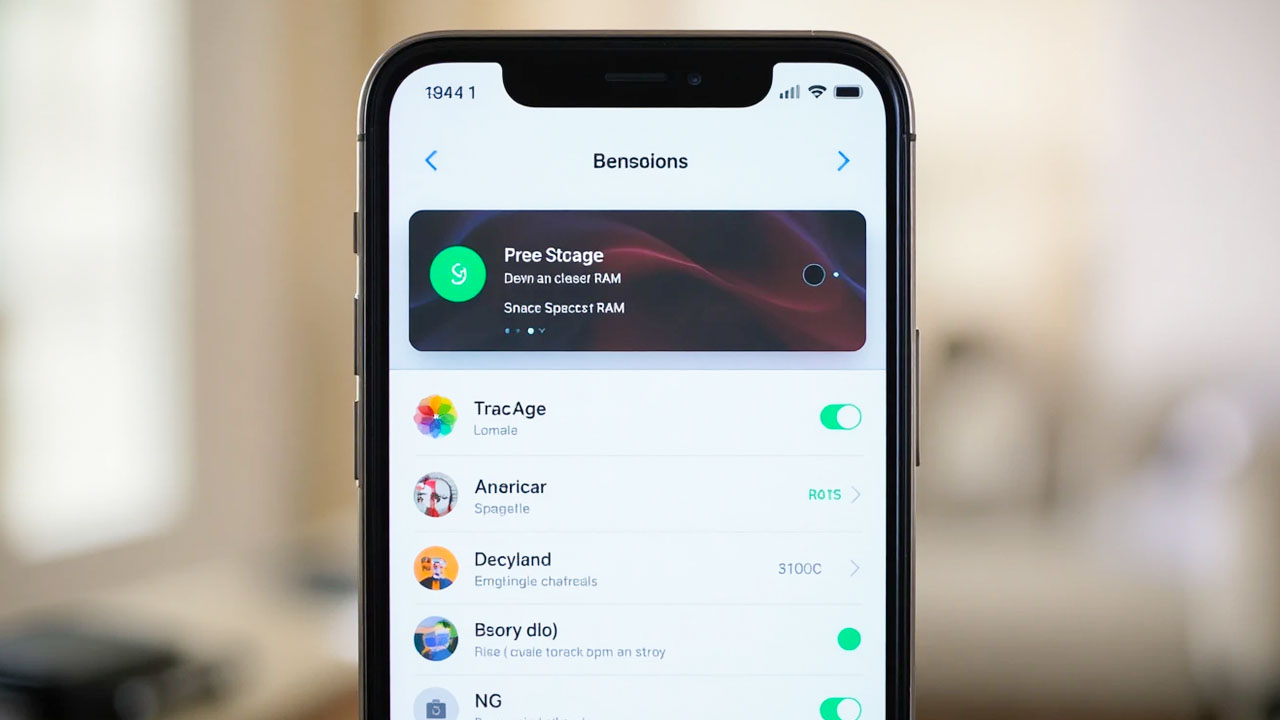
Both solid-state drives (SSDs) and traditional hard drives (HDDs) need a buffer of free space to function efficiently. When your main system drive (usually the C: drive on Windows) is filled to more than 85% to 90% of its capacity, the operating system struggles to write temporary files and manage virtual memory, causing a massive performance bottleneck.
- Run Built-in Cleanup Tools: Windows users can search for and run Disk Cleanup or enable Storage Sense in the system settings to automatically purge temporary internet cache files, system logs, and previous installation fragments. Mac users can utilize the Storage management tool under “About This Mac” to review large files and empty the trash automatically.
- Target the Downloads Folder: The downloads directory is a notorious graveyard for massive installer files (
.exeor.dmg) that you only needed once. Delete them or move heavy media libraries (photos, videos, music) to an external drive or cloud storage.
Step 4: Streamline Your Web Browser
Sometimes, it isn’t your operating system that is slow, but rather your web browser. Because we spend so much of our computing time inside browsers like Chrome, Edge, or Safari, a bogged-down browser can easily mimic a bogged-down computer.
- Trim Your Extensions: Every browser extension or add-on you install runs as its own miniature process in the background. If you have dozens of coupon finders, ad blockers, and productivity trackers active, your RAM usage will skyrocket. Disable or delete the extensions you don’t use regularly.
- Clear Cache and Cookies: While cached data helps websites load faster initially, a corrupted or bloated cache file can cause severe lag. Dive into your browser’s history settings and clear out cached images and files to give it a fresh start.
Step 5: Check for Malware and Resource Hogs
If your computer suddenly slowed down overnight or starts lagging when you aren’t doing anything, malicious software or a corrupted system loop might be eating up your processing power.
- Check the Resource Monitors: Open Task Manager (Windows) or Activity Monitor (Mac) and sort the processes by CPU and Memory (RAM) usage. If you see a random, unfamiliar application utilizing 95% of your CPU, it is likely the culprit.
- Run a Full Security Scan: Malicious programs or cryptocurrency mining scripts hidden in shady downloads can run silently in the background, pushing your hardware to its thermal limits. Use the built-in Windows Security or a trusted third-party antimalware tool to run a comprehensive system scan.
Troubleshooting Action Plan Summary
| Action Step | Target Area | Primary Benefit |
| Disable Startup Apps | System Boot Memory | Drastically cuts down boot times |
| Uninstall Bloatware | CPU & Storage | Stops unauthorized background processes |
| Clean System Drive | Virtual Memory/Storage | Prevents drive choking and file lag |
| Purge Browser Extensions | System RAM | Frees up active memory for multitasking |
| Run Malware Scan | Overall Security | Eliminates hidden resource siphons |
The Last Resort: Hardware Upgrades
If you have executed all of the steps above and your machine still crawls, your hardware might simply be hitting its physical limits against modern, demanding software. Before throwing the computer away, check if it allows for two highly cost-effective upgrades:
- Swap your HDD for an SSD: If your operating system is still running on an old mechanical hard drive, upgrading to a Solid State Drive is the single most impactful performance upgrade you can make. It can make a ten-year-old computer feel brand new.
- Upgrade your RAM: If your computer has less than 8GB of RAM, upgrading to 16GB will give the system the breathing room it needs to handle multitasking, multiple browser tabs, and modern applications seamlessly.